
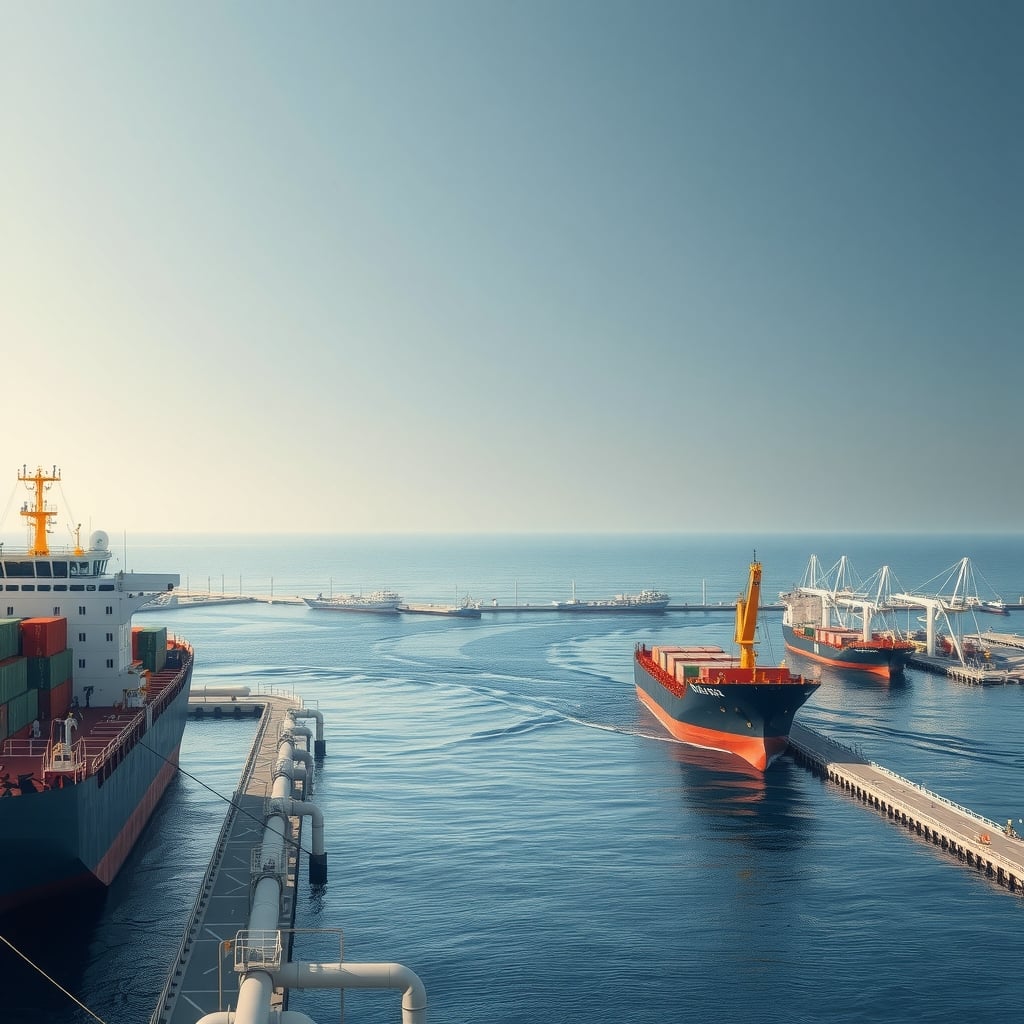
Hormuz Crisis: Redrawing Global Trade Corridors
The ongoing Hormuz shipping crisis has prompted governments and corporates across the Middle East and beyond to accelerate a fundamental redrawing of global trade corridors.
New Export Hub
AD Ports Group and Abu Dhabi petrochemicals giant Borouge have signed a partnership agreement to explore establishing an alternative international export hub on the UAE’s east coast, using AD Ports’ Fujairah Terminals and eastern port facilities as the anchor.
- Borouge is AD Ports’ largest exporter and the two companies have worked together since 2001.
- The new agreement goes further, with both parties committing to assess dedicated polyolefins infrastructure on the east coast and to engage jointly with shipping companies to develop new routes via Fujairah that reduce reliance on constrained maritime passages through Hormuz.
Pipeline Projects
The UAE is pressing ahead with pipeline projects, including the acceleration of a new West-East Pipeline project, which will double export capacity through Fujairah.
Saudi Arabia’s East-West pipeline, running 1,200 km from Abqaiq to the Red Sea port of Yanbu, offers an estimated 4.5m barrels per day of effective export capacity.
Alternative Routes
Iran’s own Goreh-Jask pipeline, which could theoretically allow Tehran to bypass the strait it has blockaded, remains effectively non-operational.
More ambitious concepts are also circulating, including a canal through the Hajar Mountains to Fujairah.
Global Implications
The redrawing of corridors is not confined to the Gulf, with China accelerating investment in the Trans-Caspian International Transport Route, also known as the Middle Corridor, connecting China to Europe via Kazakhstan and the Caspian Sea.