
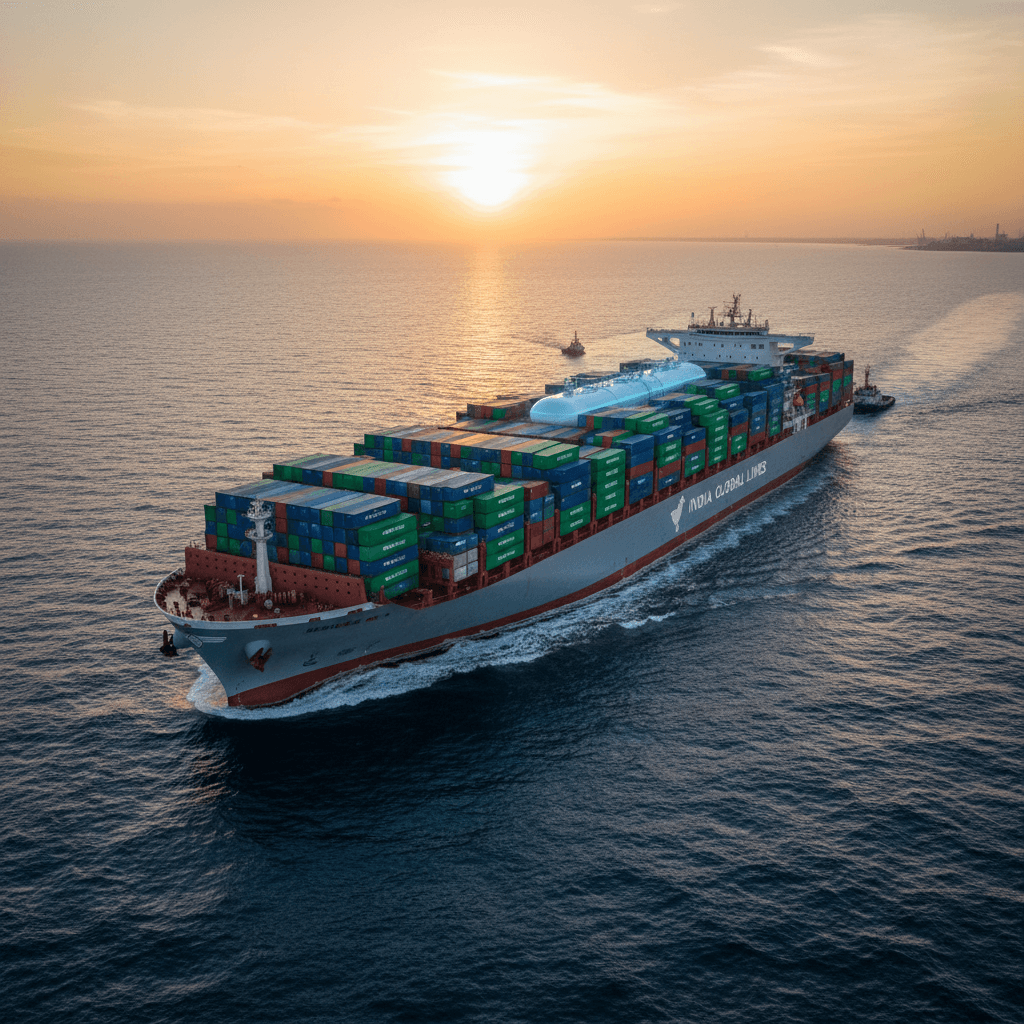
In a landmark development for the international shipbuilding sector, India has officially entered the era of next-generation sustainable shipping. Swan Defence and Heavy Industries (SDHI) Limited has secured a historic contract to construct four 92,500 dwt ammonia dual-fuel bulk carriers, marking the first order of its kind for an Indian shipyard.
Advanced Vessel Specifications and Strategic Partnerships
The contract, signed with Energy ONE Limited, involves the construction of massive vessels at the Pipavav shipyard in Gujarat. Each carrier will measure 229.5 meters in length with a beam of 37 meters, placing them among the largest commercial vessels ever commissioned for construction within India.
The technical sophistication of the project is underscored by global collaboration:
- Design: Engineering and propulsion systems are being developed by South Korean firm KMS-EMEC.
- Classification: The vessels will be built to the rigorous standards of DNV.
- Propulsion: The ships will feature ammonia-fuelled engines, a critical technology in the industry's path toward decarbonization.
A Significant Milestone for Indian Shipbuilding
The delivery schedule is set to begin in October 2029, with subsequent vessels rolling out at four-month intervals. Vivek Merchant, Director at SDHI, emphasized that this project is a testament to the growing global confidence in Indian maritime engineering. "Ammonia as a marine fuel is still in its nascent stages, and we are proud to lead the transition at our Pipavav facility," Merchant stated.
Investment and Green Shipping Initiatives
Energy ONE, the general partner for New Energy One, manages a $2 billion capital program dedicated to zero-emission newbuildings. Beyond this construction contact, New Energy One (NEO) has deepened its commitment to the Indian maritime sector by signing a Memorandum of Understanding (MoU) with Sagarmala Finance Corp. This partnership aims to co-invest in sustainable shipping projects through India’s Maritime Development Fund, signaling a long-term strategic shift toward green logistics in the region.
For stakeholders in the shipping industry, this move highlights the expanding geography of high-tech vessel construction and the accelerating adoption of ammonia as a viable alternative for deep-sea commerce.