
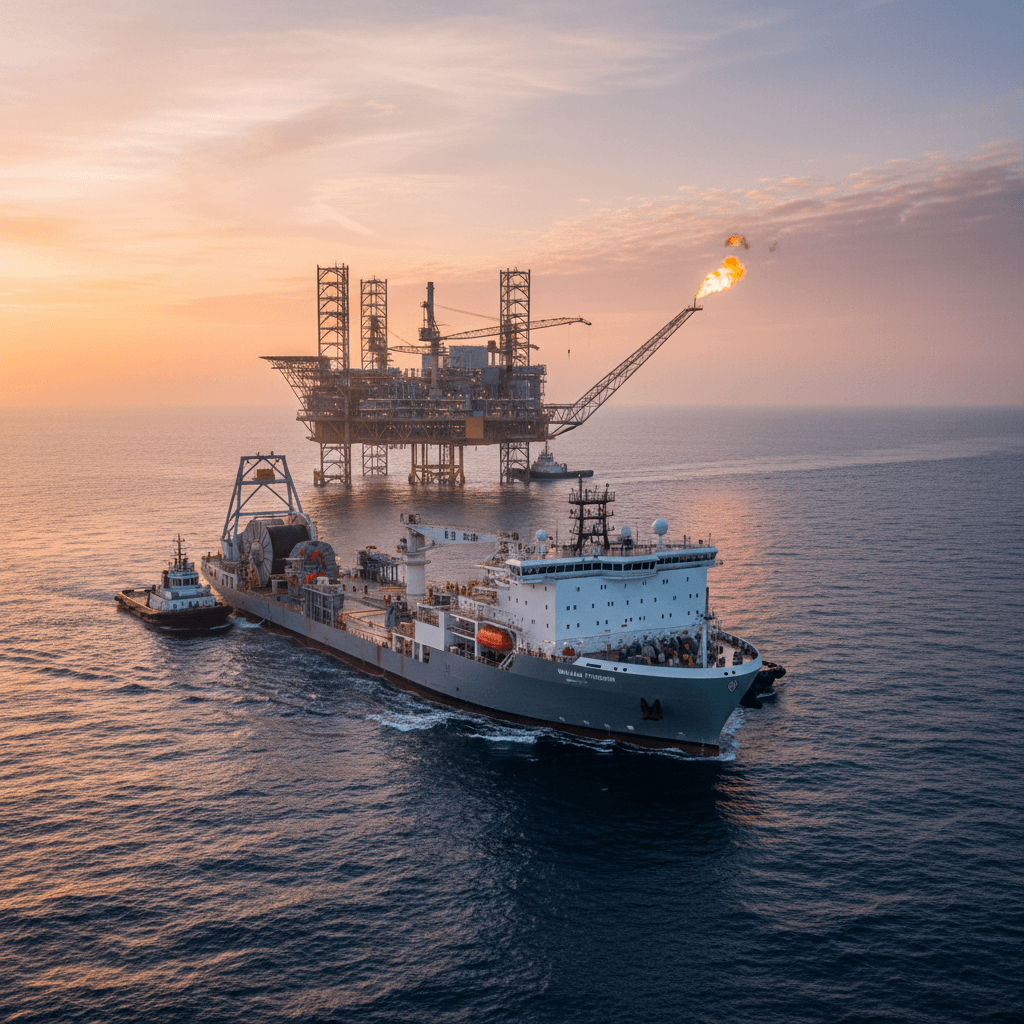
The offshore energy and subsea infrastructure sectors are witnessing a significant leap in technical capabilities as Jan De Nul launches its latest record-breaking vessel, the William Thomson. This launch marks a pivotal moment for the maritime industry, as global demand for specialized cable-laying vessels continues to surge amid heightened security concerns for undersea infrastructure and the rapid expansion of offshore wind energy.
Setting New Standards in Subsea Infrastructure
The William Thomson is the second of two identical giant subsea cable-laying vessels currently under construction in China. Alongside its sister ship, the Fleeming Jenkin—which was launched in October 2025—these vessels represent the absolute pinnacle of current maritime engineering in their class. Measuring 215 meters in length and boasting an unprecedented cargo capacity of 28,000 tonnes, these ships are designed to redefine the efficiency of subsea cable installation.
The strategic Importance of these vessels cannot be overstated. Their design allows for:
- Unmatched Reach: Capability to install cables in both shallow areas and ultra-deep waters reaching 4,000 meters.
- Enhanced Efficiency: A massive loading capacity enables the transport of longer cable segments in a single piece, minimizing the need for complex subsea connections.
- Reduced Logistics: Greater onboard volume translates to fewer return trips to port for reloading, significantly lowering the carbon footprint and operational costs of major projects.
Powering Europe’s Energy Transition
The first major assignment for this new fleet will be the ambitious 2GW program by TenneT, the grid operator for the Netherlands and Germany. This project represents a generational shift in how offshore wind farms connect to the mainland. While current grid connections typically handle between 700 and 900 MW, the new 525 kV DC cables being laid by Jan De Nul’s vessels will support up to 2 GW—surpassing the output of a standard nuclear power station.
To facilitate this, the Fleeming Jenkin and William Thomson are tasked with installing over 2,800 kilometers of high-voltage cabling across four distinct grid connections. The Fleeming Jenkin is expected to join the fleet in late 2026, with the William Thomson scheduled to become fully operational in the first half of 2027.
Market Outlook and Regional Stability
The investment in such high-capacity vessels comes at a time when subsea assets are under increased scrutiny. Recent incidents in Baltic and Asian waters have highlighted the vulnerability of international data and energy links. By deploying larger, more capable vessels, the industry is not only meeting the needs of the green energy transition but also enhancing the resilience and speed with which critical international infrastructure can be deployed and maintained.