
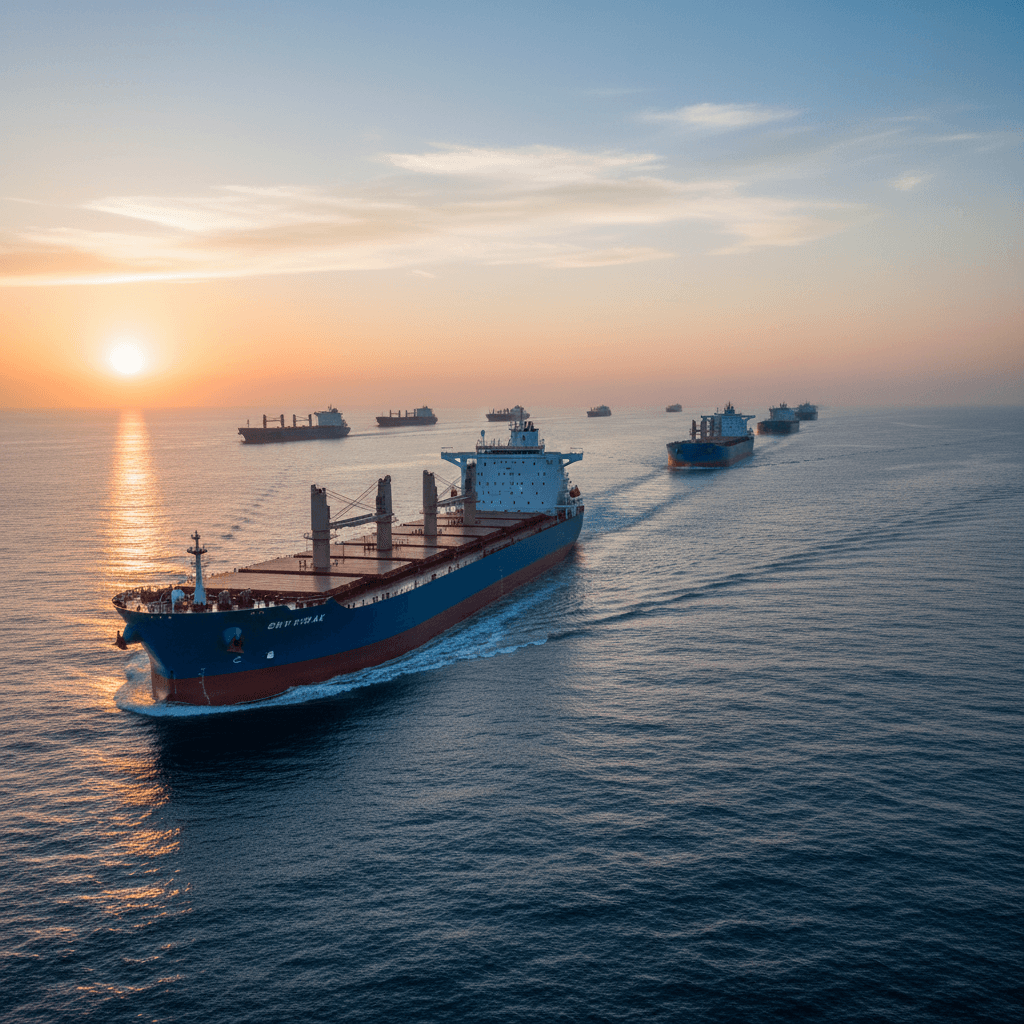
Seatankers Management, the private investment arm of billionaire shipping magnate John Fredriksen, has signaled a significant return to the dry bulk sector. The Cyprus-based company has reportedly commissioned up to eight Newcastlemax newbuilds from China’s Panjin Dajin Offshore, marking a strategic pivot back to large-scale dry cargo assets.
Strategic Investment in Large Dry Bulk
According to shipbuilding sources, the firm order consists of four 210,000 dwt vessels, with options for an additional four units of the same specifications. Industry brokers estimate the contract price at approximately $73.5 million per vessel. If all options are exercised, the total investment could reach nearly $600 million.
The delivery schedule for the initial four vessels is slated for between the second half of 2028 and the first half of 2029, securing long-term growth for the Seatankers fleet during a period of evolving trade dynamics.
Diversification Beyond Tankers
While Fredriksen’s various entities have recently focused heavily on the tanker market—specifically lining up a series of VLCC orders at Hengli Shipbuilding—this latest move reaffirms a commitment to a diversified maritime portfolio. Seatankers has maintained a presence in the Newcastlemax segment for several years, but this new order significantly bolsters its capacity to handle long-haul bulk trades.
Market Trends and Peer Activity
The move by Seatankers mirrors a broader trend among major shipowners who are betting on the efficiency and scale provided by Newcastlemax vessels. Other notable players securing similar berths at the Dajin shipyard include:
- Danaos: The Greek owner has also secured slots for 211,000 dwt units due from 2028.
- Union Maritime: The UK-based firm recently entered the segment with its first Newcastlemax orders.
- Seacon Shipping: The Hong Kong-listed operator is also expanding its footprint in this specific vessel class.
As the maritime industry prepares for 2028 and beyond, the shift toward larger, more efficient dry bulk carriers suggests a long-term confidence in high-volume commodities and global trade resilience.