
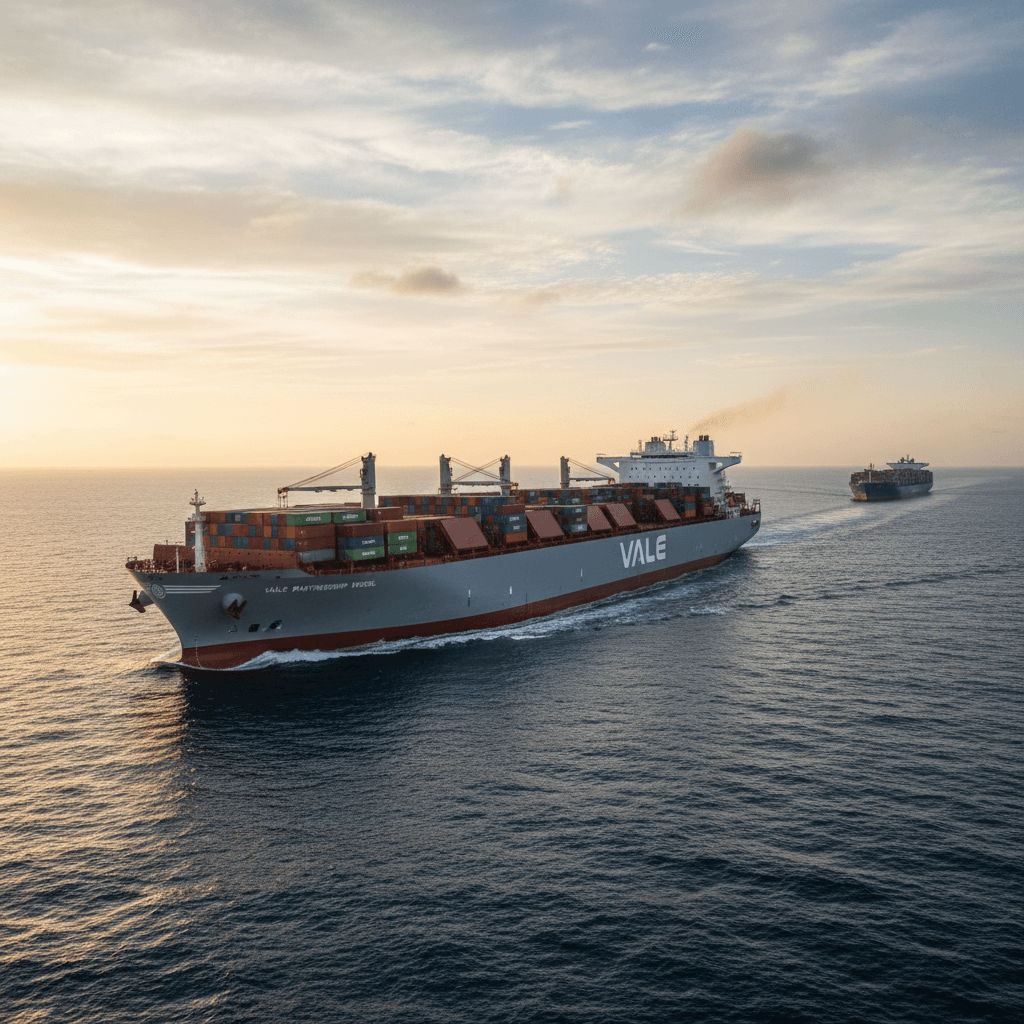
In a significant move for the global dry bulk sector, Brazilian mining giant Vale has reached an agreement with China’s Shandong Shipping to commission the first ocean-going vessels powered primarily by ethanol. This partnership marks a pivotal step in exploring alternative fuels for Very Large Ore Carriers (VLOCs).
Advanced Vessel Specifications
The agreement focuses on the construction of two 325,000 dwt Guaibamax bulkers, backed by 25-year long-term contracts. Scheduled for delivery starting in 2029, these vessels are designed with a high degree of operational flexibility. The newbuilds will feature triple-fuel capabilities, allowing them to operate on ethanol, methanol, and conventional bunker fuel. Furthermore, the technical design allows for future conversions to ammonia or LNG, future-proofing the assets against shifting environmental regulations.
Integrating Wind Propulsion and Efficiency
Beyond the innovative fuel systems, these vessels will incorporate cutting-edge efficiency technologies, including:
- Rotor Sails: Each ship will be equipped with five rotor sails to harness wind energy.
- Efficiency Upgrades: A suite of technical enhancements aimed at reducing fuel consumption.
- Emission Reduction: Comparison with current Guaibamax ships suggests a 15% reduction in emissions through design alone, while the use of ethanol could slash CO2 equivalent emissions by up to 90% compared to heavy fuel oil.
Strategic Decarbonization Goals
Rodrigo Bermelho, Vale’s shipping director, emphasized that the multi-fuel approach provides the necessary flexibility to navigate the energy transition. This initiative is a cornerstone of Vale’s "Ecoshipping" program, which aims to reduce value chain emissions by 15% by 2035. Given that maritime transport represents a substantial portion of Vale’s Scope 3 footprint, these ethanol-ready vessels are critical to achieving their corporate sustainability targets.
This collaboration builds upon an existing relationship with Shandong Shipping, which is already set to deliver ten methanol dual-fuel units to Vale beginning in 2027. By diversifying into ethanol, Vale and Shandong are positioning themselves at the forefront of maritime innovation, proving that the pathway to net-zero involves a blend of advanced propulsion and alternative fuel sources.