
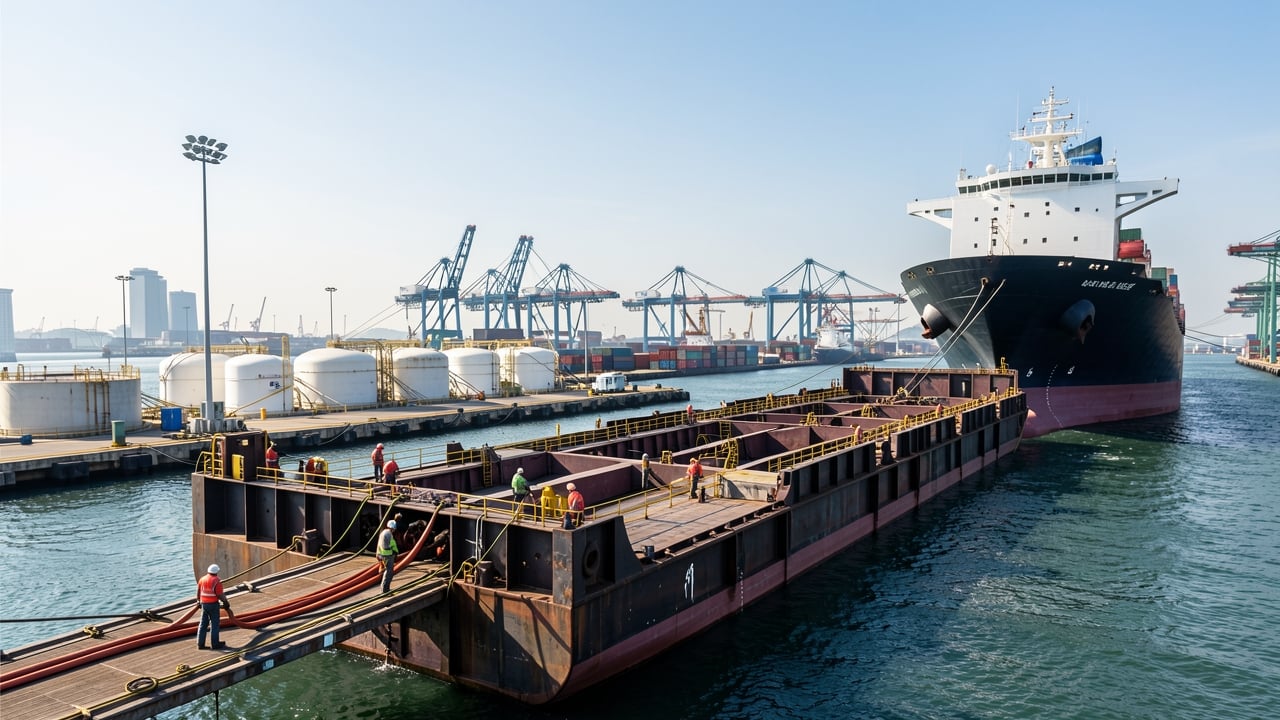
The outbreak of hostilities between the United States and Iran on 28 February has triggered a dramatic rise in marine fuel costs, with prices now roughly three‑quarters higher than the pre‑conflict level. The surge is being felt across the global fleet, from container operators to bulk carriers, and is prompting a reassessment of bunkering strategies.
Price spikes at the world’s biggest bunkering hub
Singapore, the pre‑eminent bunkering centre, recorded a VLSFO price of US$509 per tonne on 27 February, the last trading day before the war commenced. By the first Monday after the conflict, the same grade had climbed to US$886 per tonne – a 74 % increase. High‑sulphur fuel oil (HSFO) followed a similar trajectory, rising from US$432 to US$764 per tonne (77 % higher).
What the numbers mean for shipowners
For a vessel taking on 1,000 tonnes of VLSFO, the extra cost exceeds US$377,000 compared with the pre‑war price. Larger bunkers amplify the impact; a 3,000‑tonne fill now costs more than US$1.1 million extra. The initial price shock peaked in mid‑March, with VLSFO touching US$1,120 per tonne, before moderating as supply chains adapted.
Scrubber economics under pressure
The price divergence between low‑sulphur and high‑sulphur fuels has widened the discount enjoyed by scrubber‑equipped vessels. In Singapore, the premium for burning HSFO fell from a US$77 per tonne advantage pre‑war to roughly US$122 today, even as HSFO prices surged. This shift is prompting some operators to reconsider the cost‑benefit balance of existing scrubber installations.
Supply constraints and longer lead times
Beyond price, availability has become a critical issue. Disruptions around the Strait of Hormuz have forced many ships to bunker earlier or reroute to alternative hubs. Singapore’s VLSFO lead times have stretched into double‑digit days, while Fujairah at times faced near‑dry conditions, with stocks dropping to multi‑year lows and only a few suppliers able to meet demand.
- Japanese markets report tighter VLSFO availability, requiring longer notice periods.
- Northern European ports are experiencing extended delivery windows for low‑sulphur grades.
- Middle Eastern supplies remain constrained, heightening vulnerability to further geopolitical shocks.
Looking ahead
More than seven months after the conflict began, bunker prices have settled above pre‑war levels, mirroring the sustained elevation seen in freight rates. While the initial shock has faded, the embedded cost of disruption continues to influence operational budgeting and route planning across the industry.
Shipowners are now placing greater emphasis on fuel inventory management, flexible bunkering contracts, and the potential re‑evaluation of scrubber strategies to mitigate the ongoing financial pressure.