
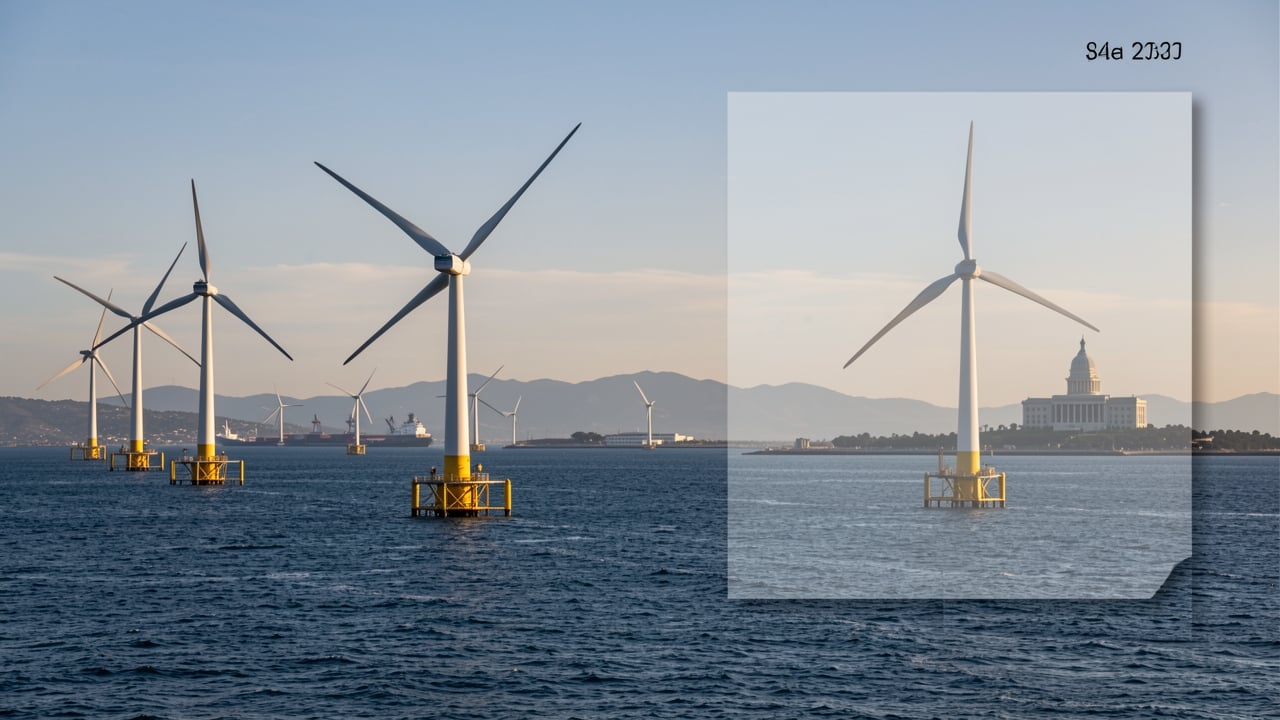
California’s Attorney General and the California Energy Commission have filed a federal lawsuit against the Trump administration and renewable‑energy developer Golden State Wind. The case targets an April agreement that would have reimbursed the developer $120 million for relinquishing a 2‑gigawatt floating offshore wind lease off the state’s Central Coast.
Background of the Morro Bay Lease
Golden State Wind, a joint venture between Ocean Winds and Reventus Power, secured the Morro Bay lease in the 2022 offshore wind auction, paying $120 million for the right to develop a large‑scale floating wind farm. The project was slated to become one of the nation’s first multi‑gigawatt offshore wind installations, with the developer also pledging more than $30 million toward workforce training, supply‑chain development, and community outreach programmes in California.
Federal Cancellation Arrangement
In early 2026, the Department of the Interior, under the Trump administration, announced that the lease would be cancelled. In exchange, the federal government agreed to draw $120 million from the Judgment Fund to reimburse Golden State Wind, while the developer would allocate an equivalent sum to conventional energy projects outside California.
Legal Grounds of the Challenge
The state argues that the cancellation violates two key statutes:
- Outer Continental Shelf Lands Act (OCSLA): The act governs the leasing and development of offshore resources and requires transparent, competitive processes.
- Judgment Fund Act: The act restricts the use of the Judgment Fund for purposes other than the settlement of federal judgments, prohibiting its use for lease‑related reimbursements.
California is seeking a court order to invalidate the April agreement, reclaim the $120 million, and preserve the lease for the originally approved floating wind project.
Federal Agency Response
The Department of the Interior told Reuters that the reimbursement arrangement had been reviewed and approved by the Department of Justice, following all required procedural steps. Interior officials maintain that the deal was a lawful settlement of the lease cancellation.
Implications for the U.S. Offshore Wind Market
This lawsuit adds a new layer of uncertainty to the U.S. offshore wind sector, which has already faced setbacks from policy shifts and funding delays. A ruling in favour of California could set a precedent limiting the federal government’s ability to unilaterally cancel leases and re‑allocate funds, potentially encouraging greater investor confidence in future auctions.
Next Steps
The case is now pending before a federal district court. Both parties have indicated they will pursue all available appeals. Industry observers will be watching closely, as the outcome could influence the timing and structure of upcoming offshore wind projects along the West Coast.
For maritime stakeholders, the dispute underscores the intertwining of regulatory, legal, and commercial considerations that shape the development of offshore renewable energy assets.