
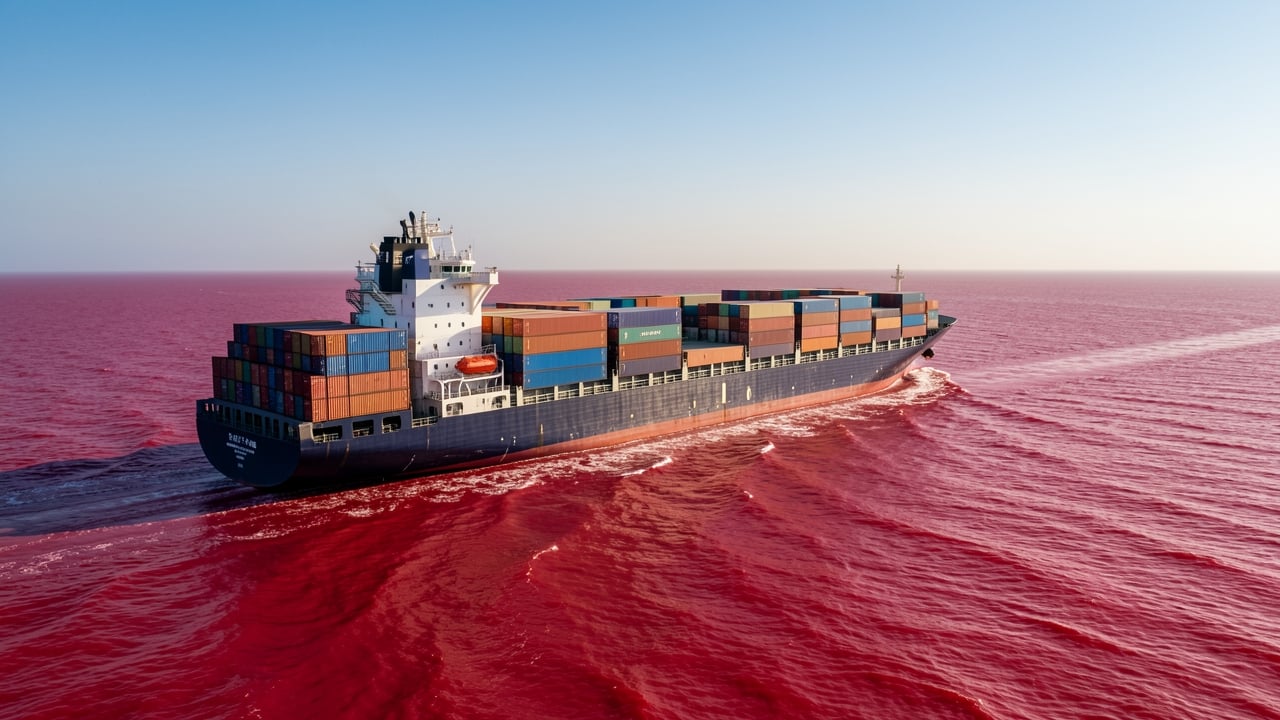
Red Sea Capacity Surge Accelerates
According to the latest Xeneta Weekly Ocean Container Shipping Market Update, carriers have dramatically increased the amount of space offered on routes that transit the Red Sea. Between 27 August and 5 October 2026, weekly scheduled capacity crossing the Bab el‑Mandeb strait in at least one direction rose from roughly 224,000 TEU to 448,000 TEU – a near‑doubling in just six weeks.
Drivers Behind the Rapid Return
Emily Stausbøll, Xeneta’s Senior Shipping Analyst, notes that the resurgence reflects a strategic shift by shipping lines following a period of diversions around the Cape of Good Hope. While the exact security reassessments remain confidential, the data indicates that carriers now feel confident enough to restore services, even though the current level is still below the pre‑diversion peak of 930,679 TEU recorded in August 2023.
Implications for Global Freight Rates
The additional capacity is expected to flow back into the global fleet, easing the congestion that has characterised ocean networks since the Hormuz incident. By releasing vessels that were previously idled or rerouted, the market may see a moderation in the sharp freight‑rate spikes that have persisted into 2026. Stausbøll cautions, however, that the impact will unfold gradually, as the newly available space will first be absorbed by existing bottlenecks in major trade lanes.
Regional Spot‑Rate Trends
Spot rates on the Far East‑to‑U.S. corridor have held steady over the past month, but carriers are already trimming capacity – 58,200 TEU were cancelled on West‑Coast services and 35,500 TEU on East‑Coast routes this week. This proactive blank‑sailing strategy suggests that operators are wary of a potential market slowdown as October proceeds and demand tapers after the peak season.
- Far East‑to‑U.S. West Coast: 58,200 TEU blanked
- Far East‑to‑U.S. East Coast: 35,500 TEU blanked
- Far East‑to‑Europe: Spot rates stabilised, with modest gains of 2.5% into North Europe and 3.2% into the Mediterranean.
The divergence between the U.S. and European trades is narrowing. While U.S. spot rates remain roughly three times higher than those to North Europe, carriers cannot sustain such a spread indefinitely. A more balanced price structure is likely as the Red Sea capacity influx tempers overall supply‑demand dynamics.
Strategic Outlook for Shippers
Shippers should monitor the Red Sea recovery closely, as it will become a key driver of ocean container markets through 2027. The re‑introduction of capacity may unlock more reliable transit times and provide opportunities to negotiate better terms, especially for contracts that were previously priced at crisis‑inflated levels.
In summary, the rapid restoration of Red Sea services marks a pivotal moment for the industry, offering a potential alleviation of fleet strain and setting the stage for a more stable freight‑rate environment in the coming year.