
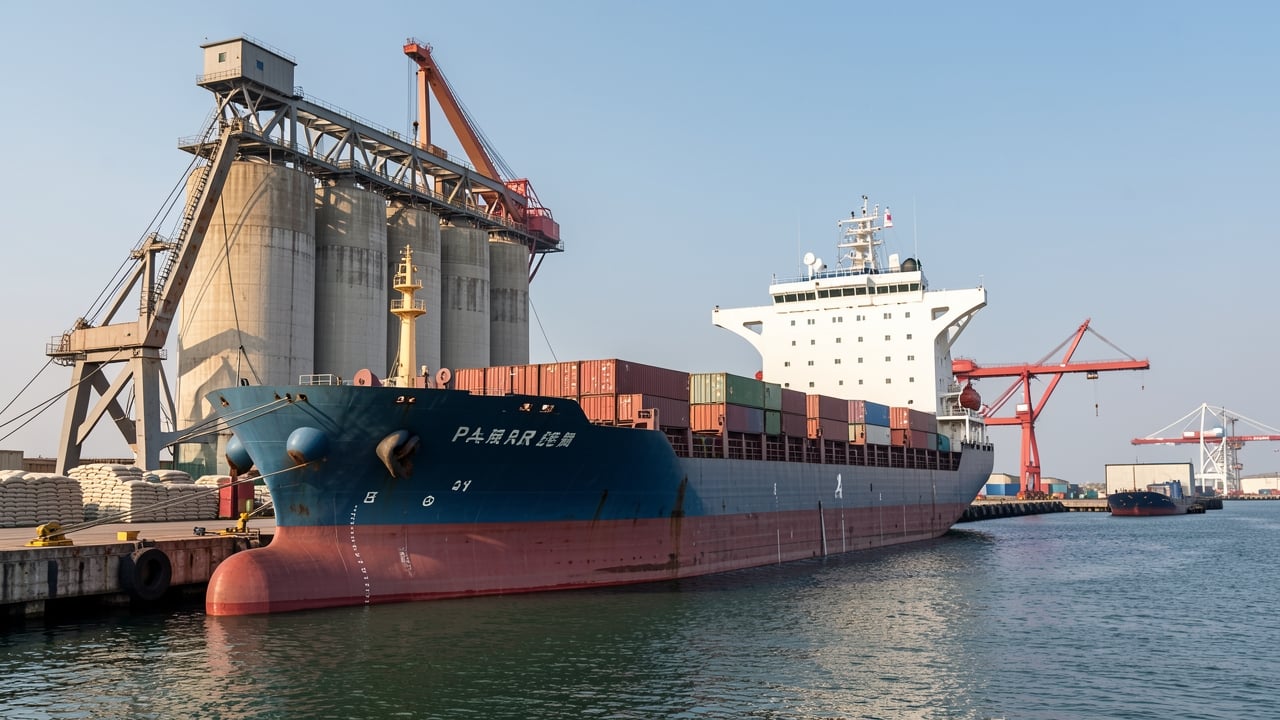
China’s Soybean Import Growth in 2026
According to the latest weekly briefing from shipbroker Banchero Costa, China has continued to expand its soybean intake during the first eight months of 2026. The country imported 75.5 million tonnes, a 4.0 % year‑on‑year increase compared with the same period in 2025. This upward trend reinforces soybeans as one of the most significant dry‑bulk commodities, representing roughly three percent of all seaborne dry‑bulk traffic.
Global Export Landscape
Brazil remains the clear leader in soybean shipments, accounting for 77.8 % of global exports in the Jan‑Aug 2026 window. Brazilian volumes rose to 95.3 million tonnes, up 6.5 % from the previous year. The United States reclaimed a stronger position, delivering 19.3 million tonnes—a 30.9 % increase YoY after a 10.8 % decline in 2025. Argentina’s export performance lagged, falling 43.1 % to 3.4 million tonnes, while Uruguay and Canada contributed modest shares of 1.3 % and 1.0 % respectively.
Import Destinations and Vessel Mix
China continues to dominate global soybean imports, absorbing 65.0 % of the seaborne market. European Union demand softened in 2025 but rebounded in 2026, reaching 9.7 million tonnes, a 5.2 % rise YoY and representing 8.3 % of worldwide imports.
Panamax vessels (including Kamsarmax) remain the workhorses of the trade, handling 93.1 % of China’s soybean imports in 2025. Supramax ships contributed 6.3 %, while Post‑Panamax types made up a marginal 0.3 %.
Key Chinese Discharge Ports
- Rizhao – 9.6 Mt (2025)
- Machong – 7.4 Mt
- Tianjin – 7.2 Mt
- Zhangjiagang – 7.0 Mt
- Gaogang – 5.4 Mt
- Fangcheng – 4.2 Mt
- Nantong – 4.2 Mt
- Dongjiakou – 4.0 Mt
- Ningbo – 3.6 Mt
U.S. soybeans arriving in China remained relatively stable in the Jan‑Aug 2026 period, slipping just 1.1 % to 12.3 million tonnes, which equates to 16.2 % of China’s total imports. Brazilian cargoes to China held steady, edging up 0.4 % to 57.0 million tonnes, representing 75.5 % of the Chinese soybean intake.
Implications for the Dry‑Bulk Market
The sustained growth in Chinese soybean demand supports a healthy order book for Panamax and Supramax carriers, encouraging charter rates to stay robust. Stakeholders should monitor potential policy shifts in the United States and Brazil, as any export restrictions could reshape cargo flows and vessel utilisation patterns in the coming months.