
Rate Adjustments Across Key Trade Lanes
Major container operators are revising their price structures as market conditions stabilise. CMA CGM announced a $300 per TEU increase for services linking Oceania with both North and South America, effective 2 November. The uplift applies to dry, refrigerated and out‑of‑gauge cargoes, as well as to paying empty containers, and covers movements in both directions, including shipments from the US Gulf and Canadian east coast to Oceania.
In addition, CMA CGM will raise rates on all Asian‑origin cargoes bound for South America by $1,000 per container from 15 October. The hike spans shipments from Japan, Southeast Asia and Bangladesh, covering dry, reefer and OOG cargoes.
Maersk is also introducing a peak‑season surcharge of $1,000 per container for dry‑box movements from the East Coast of South America to the United States and Canada, starting 5 November. A separate fuel surcharge for U.S. inland haulage will rise to $215 per container on 1 November, reflecting higher domestic fuel costs.
New Call at Suape, Brazil
MSC and Maersk are expanding their shared Gulf‑to‑East‑South‑America service by inserting a stop at the port of Suape, Brazil. MSC’s vessel Yamuna VI will make its inaugural call on 26 October. The addition is driven by seasonal export demand, peak Asia‑East‑Coast South America volumes, and the need for greater network resilience amid ongoing supply‑chain volatility.
Suez Canal Return Shortens India‑Savannah Transit
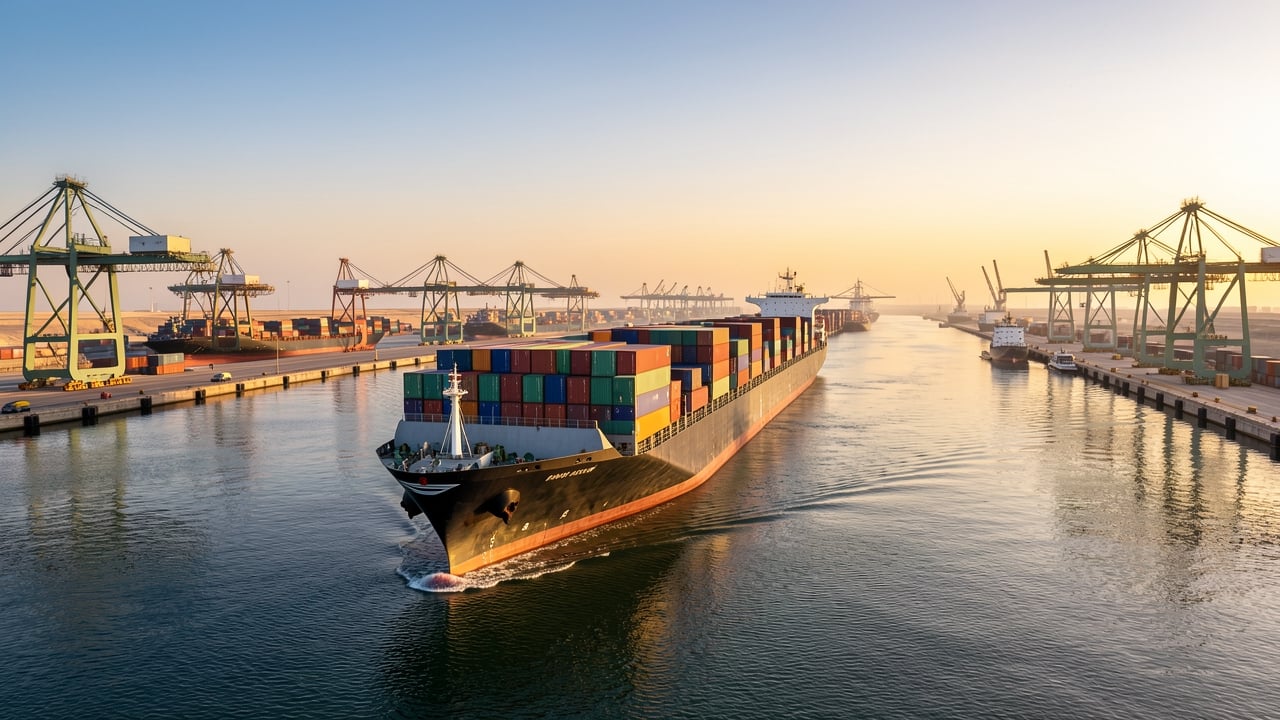
Carriers are progressively re‑adopting the Suez Canal route, delivering a substantial reduction in transit times for India‑to‑Savannah shipments. The Georgia Ports Authority reports a 10‑to‑14‑day improvement as Maersk’s MECL service, CMA CGM’s INDAMEX service, and MSC’s restored rotations resume the shorter Suez passage.
Kevin Price, President of Georgia Ports, welcomed the development, noting the enhanced connectivity between Georgia and global markets. The shift follows nearly three years of detours around the Cape of Good Hope, which had strained capacity and driven freight rates to record highs after Red Sea security incidents.
With the Suez Canal once again a viable option, the industry anticipates steadier capacity, more predictable schedules, and a gradual easing of the rate pressures that have characterised the post‑pandemic era.