
Market Overview
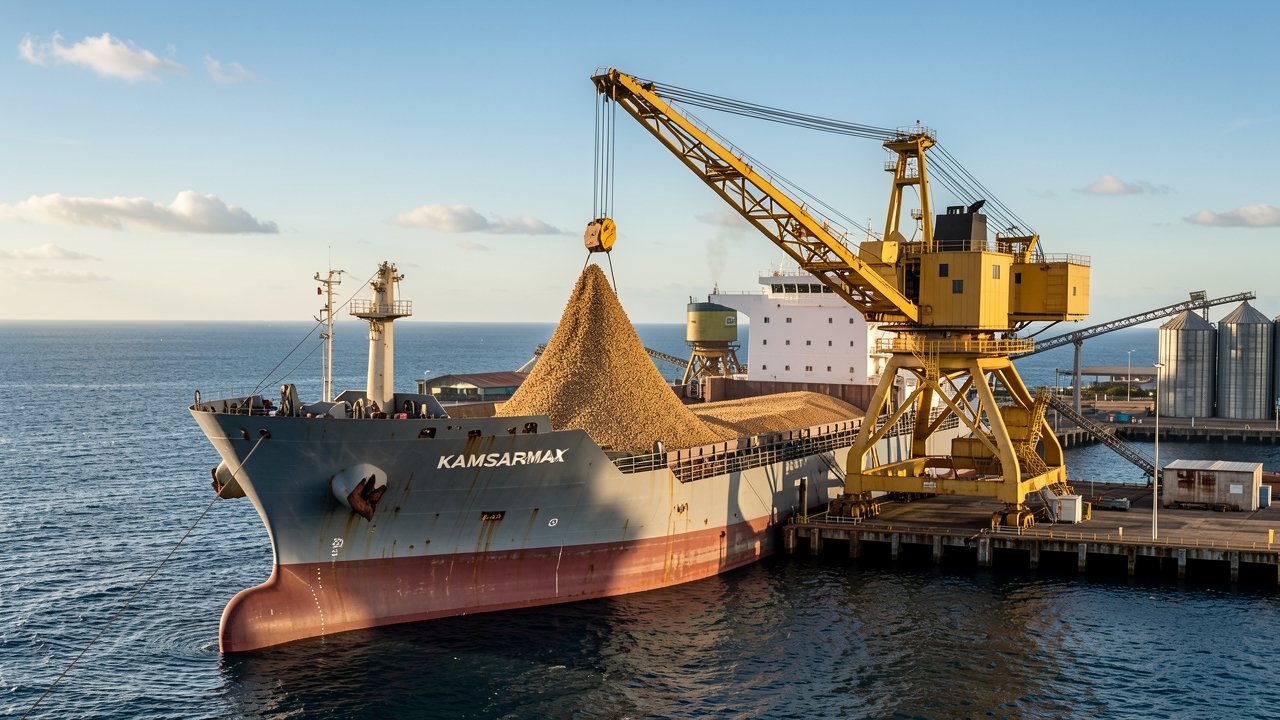
While Capesize vessels continue to set the benchmark for the dry‑bulk sector, smaller classes have displayed notable shifts in recent days. Shipbroker Xclusiv highlighted contrasting dynamics between the Kamsarmax and Ultramax segments, noting that the earnings differential that widened in late October has begun to narrow in the first half of November.
Kamsarmax Earnings Bounce Back
According to the Baltic Exchange, the average Kamsarmax freight rate (P5TC) climbed 5.7 % week‑on‑week, reaching USD 19,063 per day on 13 November, up from USD 16,999 per day at the end of October. In the same period, Ultramax earnings (S11TC) rose modestly by 1.1 % to USD 23,203 per day. Consequently, the earnings gap between the two vessel sizes narrowed from roughly USD 6,570 per day on 30 October to about USD 4,140 per day, signalling an improvement in Kamsarmax market conditions.
Persistent Challenges for Kamsarmax
Despite the recent rebound, Xclusiv cautioned that Kamsarmax rates remain 11.2 % below their end‑September levels, underscoring ongoing pressure on this segment. The divergence between Kamsarmax and Ultramax reflects differing cargo exposure, regional tonnage availability and trading flexibility. Kamsarmax vessels are still heavily reliant on coal and grain trades, whereas Ultramaxes benefit from a broader cargo mix that includes minor bulks, fertilizers, steel products and agricultural commodities. Their onboard cranes also allow Ultramaxes to serve ports with limited infrastructure, enhancing their operational versatility.
Brazilian Soybean Trade Fuels Demand
Brazil’s soybean export performance provides a positive outlook for dry‑bulk demand. Market data shows that the country exported a record 108.4 million tonnes of soybeans between January and October 2026—a 7.9 % year‑on‑year increase and roughly 600,000 tonnes above the entire 2025 volume.
- Second‑quarter exports: 44.9 million tonnes (+10.3 % YoY)
- Third‑quarter exports: 29.7 million tonnes (+8.1 % YoY)
These figures are especially relevant for the Panamax/Kamsarmax and Supramax/Ultramax segments, which play a pivotal role in moving agricultural commodities. China remains the primary destination for Brazilian soybeans, and continued export growth is likely to generate additional tonne‑mile demand, particularly on long‑haul Brazil‑Asia routes that tie up vessel capacity for extended periods.
Seasonal Considerations
Nevertheless, seasonal patterns temper the optimism. October shipments fell by almost 14 % compared with September, reflecting the gradual winding down of the Brazilian harvest season. While the annual export volume is on a record trajectory, short‑term fluctuations will continue to influence vessel deployment and freight rates across the Kamsarmax and Ultramax fleets.
Implications for the Mediterranean Corridor
For Mediterranean ports, including Cyprus, the resurgence of Kamsarmax earnings and the surge in soybean exports could translate into higher cargo volumes and improved vessel turnaround times. Operators are advised to monitor cargo booking trends closely and to adjust scheduling to capture the emerging opportunities in the South‑America‑Asia grain corridor.