
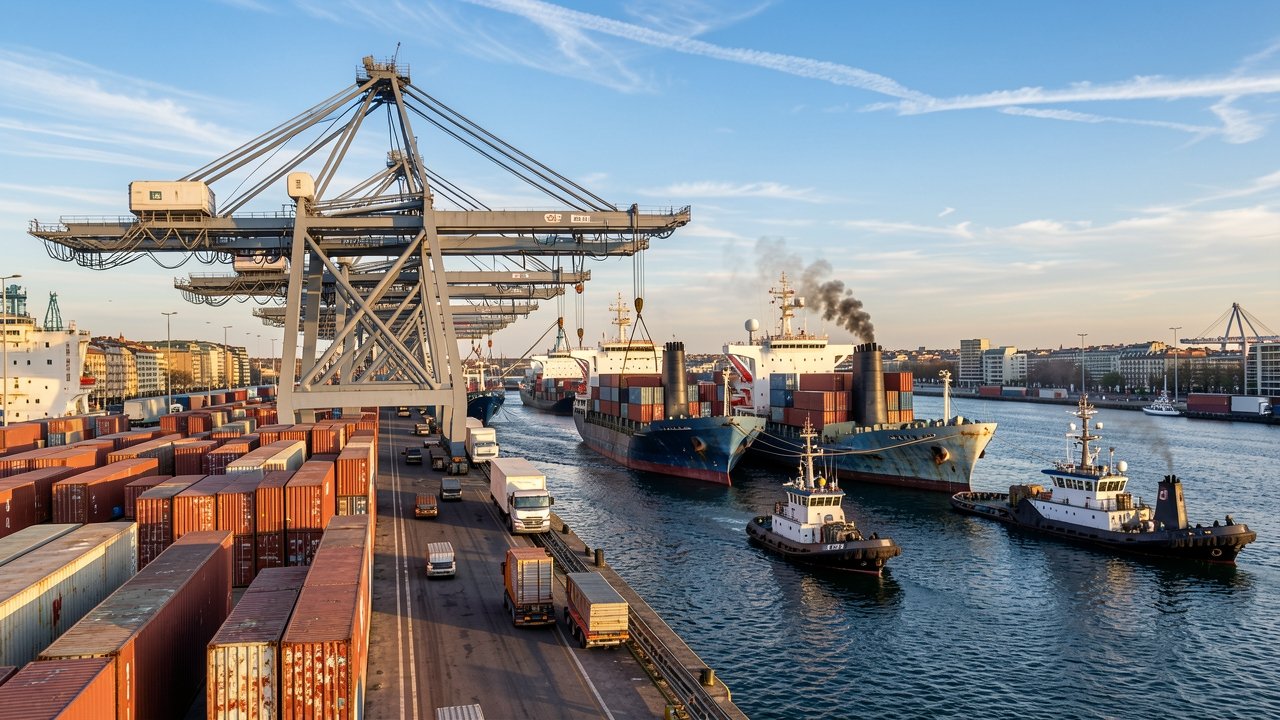
Stakeholder coalition calls for balanced ETS revision
Ahead of the European Parliament’s Environment Committee vote on the maritime Emissions Trading System (ETS), a broad coalition of port and logistics organisations is urging policymakers to adopt measures that protect the EU’s port network and maintain competitive parity. The coalition includes FEPORT (European Private Port Operators), the European Transport Workers’ Federation (ETF), the European Shippers’ Council (ESC), CLECAT, ECASBA, EMPA and the European Tugowners’ Association (ETA).
Why the ETS matters beyond ship owners
While the maritime ETS applies directly to ship operators, its indirect effects ripple through the entire port ecosystem – terminals, dockworkers, ship agents, freight forwarders, pilots, tugs and hinterland transport providers all depend on predictable vessel calls. A shift toward transshipment in non‑EU ports could lengthen lead times, increase supply‑chain complexity and erode the reliability that European businesses rely on.
Key concerns with the current amendment
The amendment adopted by the TRAN Committee on 23 November, now before the ENVI Committee, introduces a voyage‑distance criterion combined with fixed ETS reductions for different port‑call categories. While ship operators favour the distance‑based approach, the coalition warns it may create a distorted playing field for EU ports:
- Voyage‑distance bias: Ports serving the same hinterland could face disparate ETS costs simply because of the length of the inbound leg, making longer routes artificially cheaper.
- Fixed reduction thresholds: Loading just a few extra transshipment containers could push a vessel into a lower‑cost ETS category, incentivising traffic concentration in a limited number of ports.
- Risk to gateway and mixed ports: Ports that combine transshipment with broader import‑export services may lose regular calls, weakening overall maritime connectivity.
Recommendations for a fairer framework
The coalition proposes the following adjustments as the ETS revision proceeds:
- Link ETS relief to the actual proportion of containers unloaded for onward shipment to non‑EU destinations, rather than to fixed cargo thresholds.
- Apply the same proportional relief to the outbound leg of the journey, ensuring symmetry.
- Extend coverage to container vessels of 5,000 TEU and above, capturing a broader segment of EU trade flows.
Potential impact of inaction
If the ETS design favours longer voyages or creates cost jumps at arbitrary cargo volumes, shippers may reroute cargo through ports outside the EU. Such a shift would reduce demand for EU port services, diminish hinterland traffic, and limit routing options during disruptions – a scenario that would undermine the resilience of European supply chains.
Looking ahead
The European Parliament and Council are therefore urged to consider these industry insights before finalising the maritime ETS revision. A balanced approach will safeguard the EU’s port network, uphold fair competition and maintain the high level of connectivity that underpins the continent’s trade advantage.