
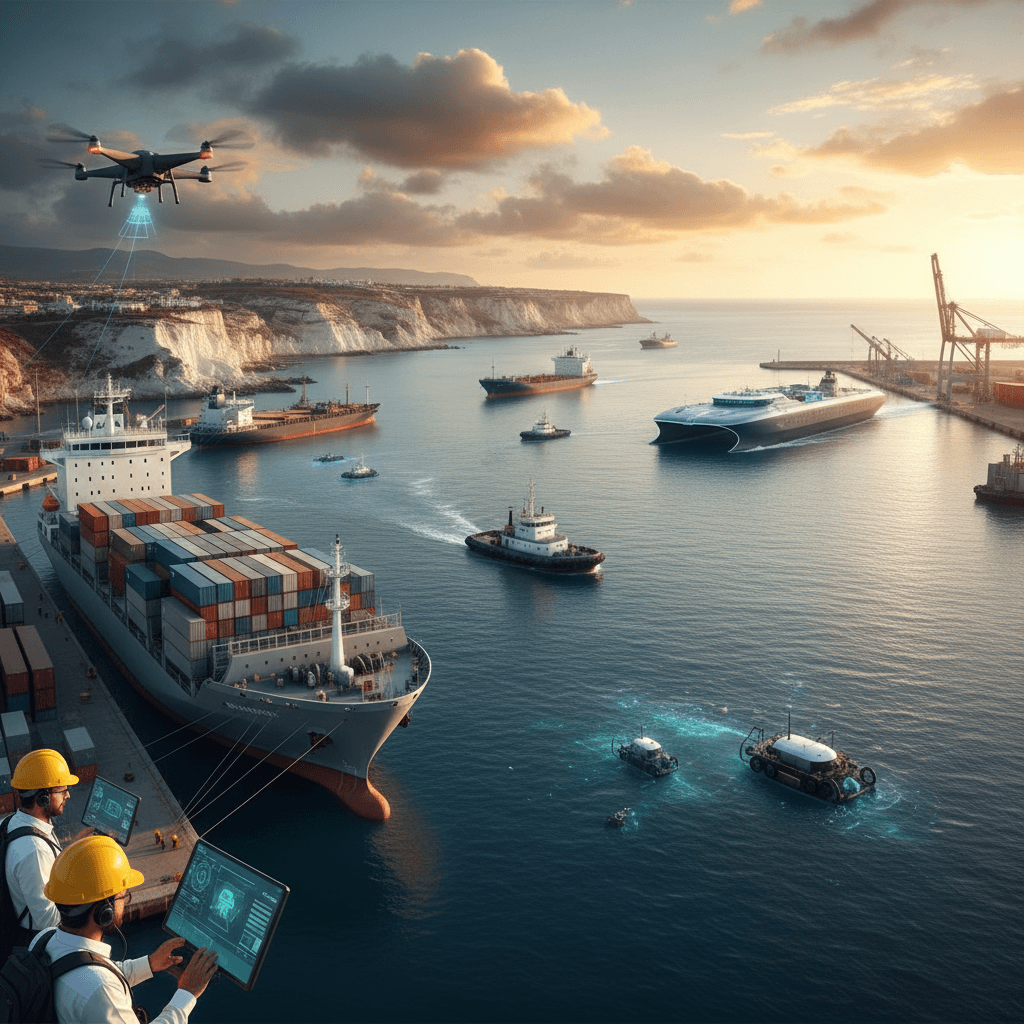
The offshore industry is undergoing a fundamental transformation in how assets are managed, controlled, and connected. Driven by three decades of infrastructure investment, the shift from basic platform-to-shore communication to high-capacity, low-latency digital ecosystems is redefining operational possibilities in the North Sea, the Gulf of Mexico, and beyond.
The Evolution of Offshore Connectivity
According to Anders Tysdal, Chief Infrastructure Officer at Tampnet, this digital evolution is best understood through three distinct waves of technological advancement. Each stage has brought offshore operators closer to a fully autonomous, data-driven model that prioritizes both safety and efficiency.
The First Wave: Remote Operations
Beginning in the 1990s, the industry moved away from interference-prone radio communications toward subsea fiber optics. Early deployments proved that high-performance connectivity could transmit critical control signals and operational data over vast distances. This shift allowed for remote monitoring, reducing the number of personnel required on-site and significantly improving Health, Safety, and Environment (HSE) performance while lowering operating expenses.
The Second Wave: The Connected Worker
The introduction of offshore mobile networks, including 4G/LTE, empowered the workforce. Personnel were no longer tethered to physical control rooms. This era introduced:
- Mobile collaboration between offshore crews and onshore experts.
- Real-time access to operational data for digital inspections.
- Accelerated troubleshooting and streamlined maintenance workflows.
The Third Wave: Digital Autonomy and AI
We are currently entering the third wave, defined by hybrid private networks that integrate fiber, 5G, and satellite technology. This stage focuses on autonomous systems and the emergence of edge computing. By processing data closer to the source, offshore assets can now support:
- Autonomous drone inspections for infrastructure.
- AI-powered predictive maintenance to prevent downtime.
- Real-time safety monitoring using advanced machine learning.
The Strategic Importance of Connectivity
For modern operators facing tighter margins and increased sustainability demands, connectivity has transitioned from a support function to core infrastructure. The transition toward unmanned operations and digital autonomy is no longer a futuristic concept but a scalable reality that ensures the maritime and energy sectors remain competitive in an increasingly digital world.