
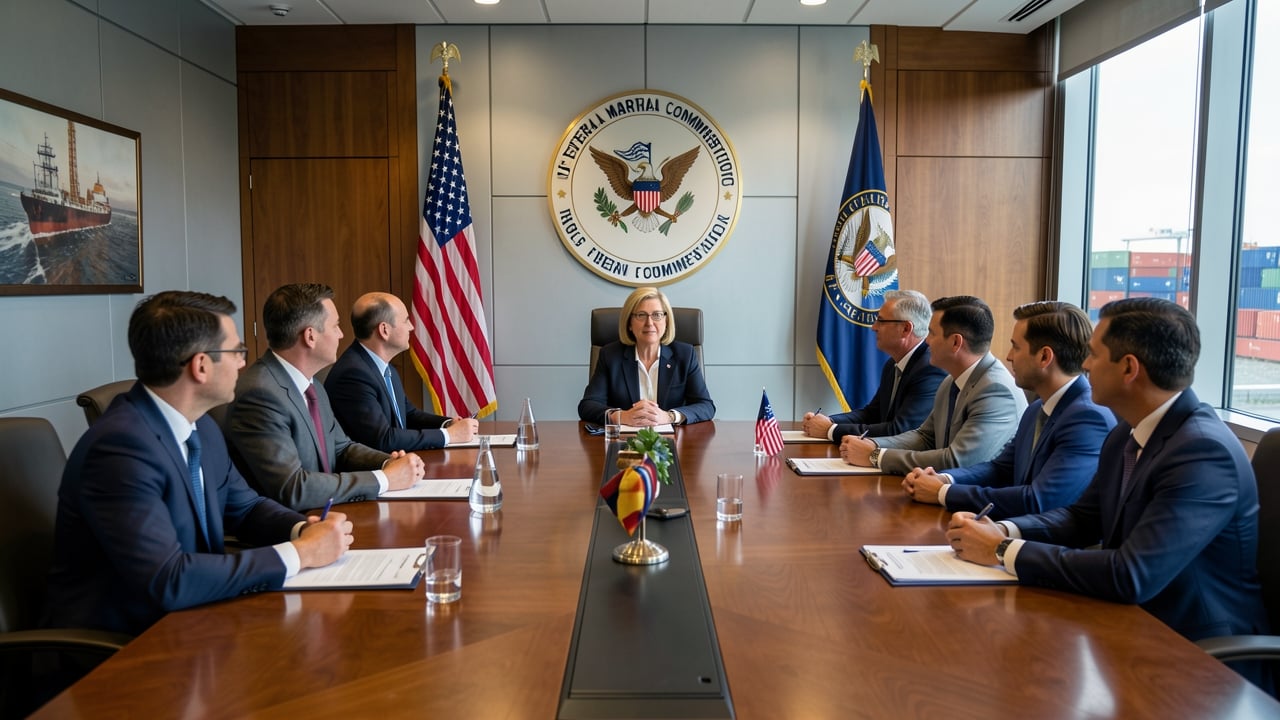
FMC Proposes New Rulemaking Flexibility to Boost Industry Dialogue
The United States Federal Maritime Commission (FMC) is nearing the final stage of a rulemaking overhaul that would loosen long‑standing restrictions on ex‑parte communications. The proposed amendment, now awaiting White House review, aims to create a more open channel for carriers, shippers and terminal operators to engage directly with FMC officials during the development of regulations.
Background and Legislative Path
In May 2026, the FMC published a Notice of Proposed Rulemaking (NPRM) titled “Rulemaking Procedures” (FR‑2026‑09450). After a public comment period, the proposal was forwarded to the Office of Information and Regulatory Affairs (OIRA) within the White House Office of Management and Budget on 21 October. The OIRA review signals that the agency is approaching the final rule stage.
Core Change: Relaxing Ex‑Parte Restrictions
Historically, the FMC has prohibited ex‑parte communications—private, informal discussions between agency staff or commissioners and individual industry participants—during informal rulemaking. While intended to guard against undue influence, the ban has also limited the ability of stakeholders to provide timely, nuanced feedback on technical matters.
- New Flexibility: Commissioners and senior staff may now hold informal meetings with carriers, terminal operators, shipper groups and their trade associations while a rule is being drafted or revised.
- Transparency Measures: Any such interaction must be recorded in a publicly accessible log, ensuring that other interested parties are aware of the dialogue.
- Scope: The allowance applies to informal rulemaking stages; formal rulemaking procedures will continue to require public notice and comment.
Implications for the Maritime Community
Industry observers view the change as a pragmatic step toward more agile regulation. By permitting direct, albeit documented, exchanges, the FMC hopes to capture technical insights that may otherwise be lost in formal comment submissions.
However, trade groups caution that the new flexibility must be managed carefully to avoid perceptions of favoritism. The requirement for a public log is intended to balance openness with fairness.
Next Steps and Timeline
Following OIRA’s review, the FMC will issue a final rule, likely before the end of 2026. Stakeholders are encouraged to monitor the FMC website for updates and to prepare internal protocols for any informal engagements that may arise under the new framework.
Conclusion
By modernising its rulemaking procedures, the FMC seeks to foster a collaborative regulatory environment while maintaining transparency. If implemented effectively, the revised ex‑parte policy could accelerate the development of pragmatic, industry‑informed maritime regulations.