
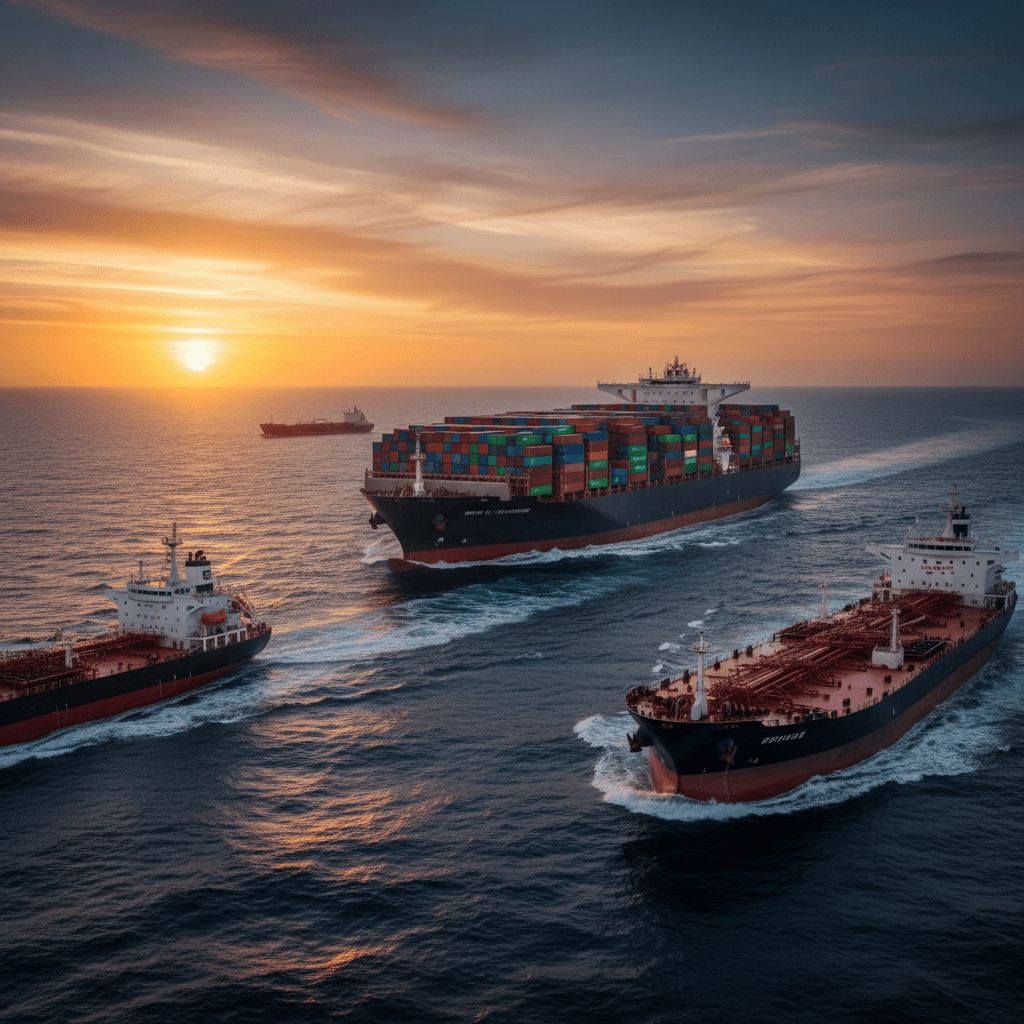
The global shipping industry is witnessing a historic surge in vessel orders, with the total orderbook reaching 191 million compensated gross tonnes (CGT) by the end of the first quarter of 2026. According to the latest data from BIMCO, this represents a 17-year high, bringing the orderbook-to-fleet ratio to 17%—the highest level recorded since 2011.
\n\nTanker Demand Fuels Record Contracting
\nThe first quarter of 2026 saw newbuilding contracting rise by 40% year-on-year, totaling 17.6 million CGT. This growth was largely driven by an unprecedented surge in crude tanker orders and a significant rebound in the LNG carrier sector. In fact, tankers accounted for 32% of all new contracts during this period, the highest share for the segment since 2017.
\n\nAs Filipe Gouveia, BIMCO’s shipping analysis manager, noted, the 2020s have seen contracting levels nearly 50% higher than the previous decade. This momentum is attributed to stronger market conditions, an expanding global fleet, and an urgent need for fleet renewal to meet environmental standards.
\n\nCurrent Orderbook-to-Fleet Ratios
\n- \n
- LNG Carriers: 40% \n
- Containerships: 37% \n
- Crude Tankers: 22% \n
- Product Tankers: 19% \n
Shipyard Capacity and Lead Times
\nThe concentration of global shipbuilding remains firmly in Asia. Chinese shipyards dominated the market in Q1 2026, securing 70% of all new contracts. South Korean yards followed with a 20% share, bolstered by their technical expertise in LNG carrier construction. Conversely, Japanese shipyards saw a dramatic decline, falling to just 1% of new orders—the lowest share in decades—due to capacity constraints and reduced price competitiveness.
\n\nThis "supercycle" in orders has led to significantly extended lead times. Approximately 57% of vessels contracted this year are not scheduled for delivery until after 2028. Institutional confidence in this cycle remains high, evidenced by major moves such as BlackRock acquiring a 5.01% stake in Samsung Heavy Industries.
\n\nPotential Bottlenecks and Market Headwinds
\nDespite the robust figures, the industry faces looming challenges. High newbuilding prices and geopolitical uncertainty in regions like the Red Sea may eventually temper demand. Furthermore, supply chain bottlenecks remain a critical concern for shipyards trying to meet delivery schedules.
\n\nIndustry analysts point to main engines—particularly those featuring dual-fuel technologies—as the primary "choke-point." Limited expansion in engine manufacturing capacity could prevent shipyards from fully utilizing their available berths, potentially leading to delivery delays in the coming years.