
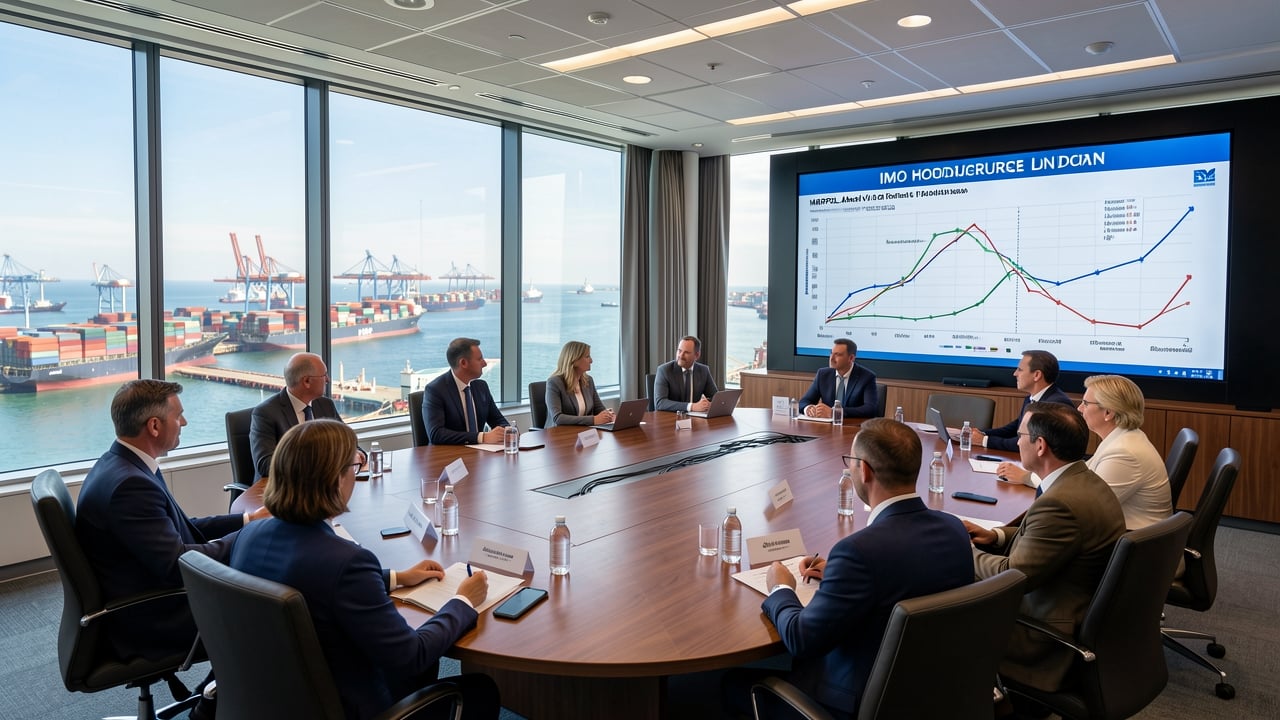
London Session Reviews the IMO Net‑Zero Pathway
From 1‑4 September 2026 the 22nd meeting of the IMO inter‑sessional working group on reduction of greenhouse gases (ISWG‑GHG) convened at the IMO Headquarters in London. BIMCO representatives attended the full week, providing a front‑row view of the intense multilateral negotiations aimed at refining the Net‑Zero Framework (NZF) under MARPOL Annex VI.
Agenda Focus: Draft Amendments to MARPOL Annex VI
The primary agenda item instructed the group to consider proposals – drawing on documents submitted to MEPC 84, MEPC 85 and prior ISWG‑GHG sessions – on how to address concerns with the draft amendments to MARPOL Annex VI that embed the 2023 IMO GHG Strategy. The discussions revealed that while member states remain generally constructive, consensus on several pivotal issues remains elusive.
Key Points of Convergence and Divergence
All delegations reiterated the unanimous adoption of the 2023 IMO Strategy on GHG reduction, yet many stopped short of explicitly referencing the strategy’s ambition and its indicative checkpoints. The lack of a unified stance on the strategy’s ambition signals potential challenges for any mid‑term IMO measure slated for December.
Substantive Issues of Disagreement
- Greenhouse Gas Fuel Intensity (GFI) trajectory: Debates continue over whether the trajectory should adopt the two‑tier approach outlined in the NZF or a single‑tier model akin to FuelEU Maritime.
- Regulatory vs. market‑driven requirements: Some members argue that reduction targets should be set opportunistically to stimulate fuel availability, while others favour requirements calibrated to existing fuel scalability and affordability.
- Funding mechanisms: The NZF’s two‑tier GFI structure enables the creation of a substantial central IMO fund. Several states oppose incorporating a dedicated fund, questioning its governance and impact on freight costs.
Outlook
The week’s deliberations underscore the complexity of aligning environmental ambition with commercial realities. With the next meeting slated for December, achieving a balanced framework that satisfies both regulatory goals and industry feasibility remains a significant hurdle. Stakeholders will be watching closely for any breakthrough that could shape the sector’s carbon‑reduction pathway for the coming decade.