
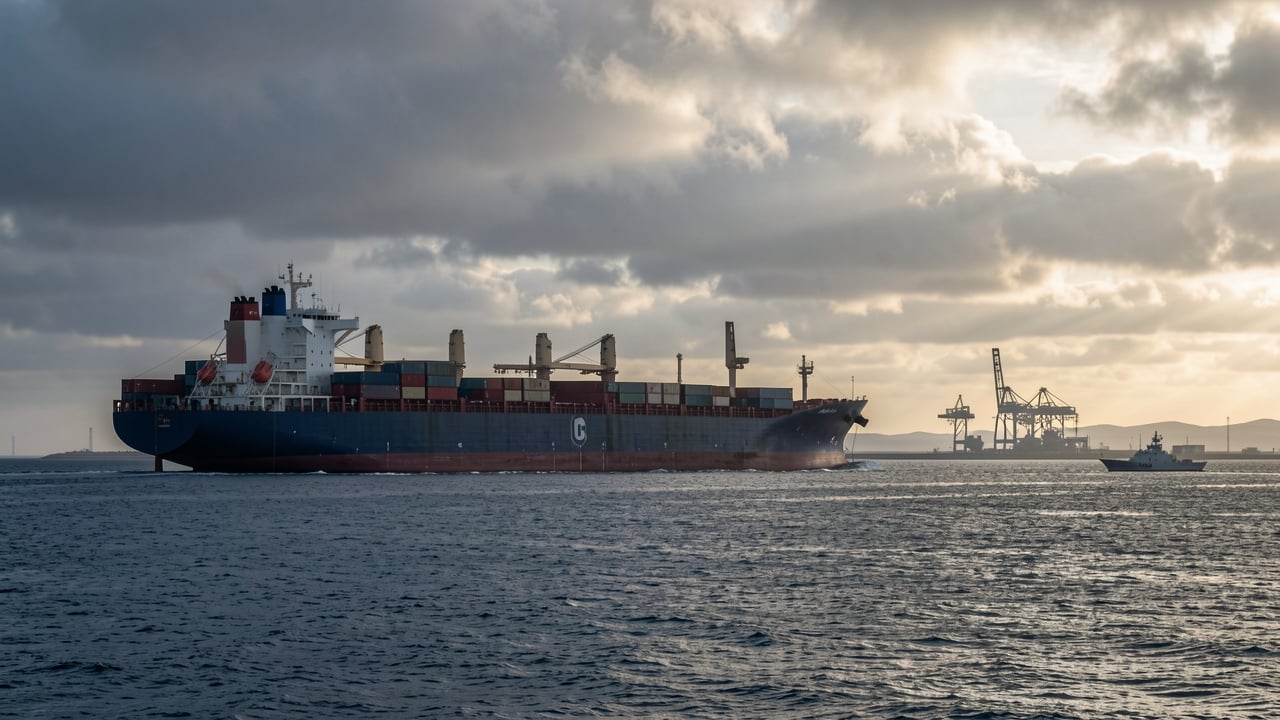
Background: A Renewed US Blockade
The United States has intensified its maritime sanctions against Iran, extending pressure beyond crude oil to petrochemical exports, aviation fuel, and essential imports. The cumulative effect is raising the cost of maintaining the status quo for Tehran, both economically and politically.
Iran’s Strategic Dilemma
Tehran now confronts a classic trilemma:
- Endure – absorb the sanctions while preserving internal stability.
- Escalate – adopt retaliatory measures that could further disrupt regional shipping.
- Negotiate – seek a diplomatic pathway to ease restrictions.
None of these options is politically inexpensive. While escalation is not inevitable, the prolonged blockade increasingly tilts calculations toward more confrontational postures.
Export Volumes in Sharp Decline
During March‑April 2026, Iran’s crude shipments peaked at 1.85 million barrels per day (mbd). By August, loading rates fell to 248 kb/d, with only a single VLCC departing Kharg Island in the preceding three weeks. Simultaneously, non‑Iranian crude transiting the Strait of Hormuz rose to roughly 9 mbd, representing about 65 % of pre‑war volumes.
Operational Pressures on Iranian Ports
US naval warnings to ballast vessels approaching Iranian terminals have made circumvention more difficult. Kharg Island’s oil inventories dropped by 700 kb in August, suggesting production cuts rather than stockpiling. Although Iran retains over 80 million barrels of oil outside the blockade zone—providing a short‑term revenue buffer—most of this volume is already contracted, and cash flows are expected to dry up within five to six months.
Broader Economic Impact
Petrochemical exports, Iran’s second‑largest foreign‑exchange earner, have slumped by 63 % since early 2026. Storage constraints threaten plant shutdowns, which would affect both export earnings and domestic employment. Food imports, especially corn, soybean, and wheat, are also below five‑year averages, while the United Arab Emirates’ recent decision to halt trade with Iran further restricts a vital supply corridor.
Risk Assessment
Individually, these stressors do not signal immediate regime collapse. However, their cumulative effect raises the probability of policy shifts, whether through heightened internal pressure or external diplomatic moves.
Potential Path Forward
- Maintain limited exports to preserve a modest cash flow while seeking humanitarian exemptions.
- Engage regional actors to explore multilateral mechanisms that could mitigate the impact of US naval warnings.
- Explore diplomatic channels for a negotiated easing of sanctions, leveraging the mutual interest of stabilising oil markets.
In the coming months, the balance between endurance, escalation, and negotiation will shape not only Iran’s economy but also regional shipping dynamics and global energy supplies.