
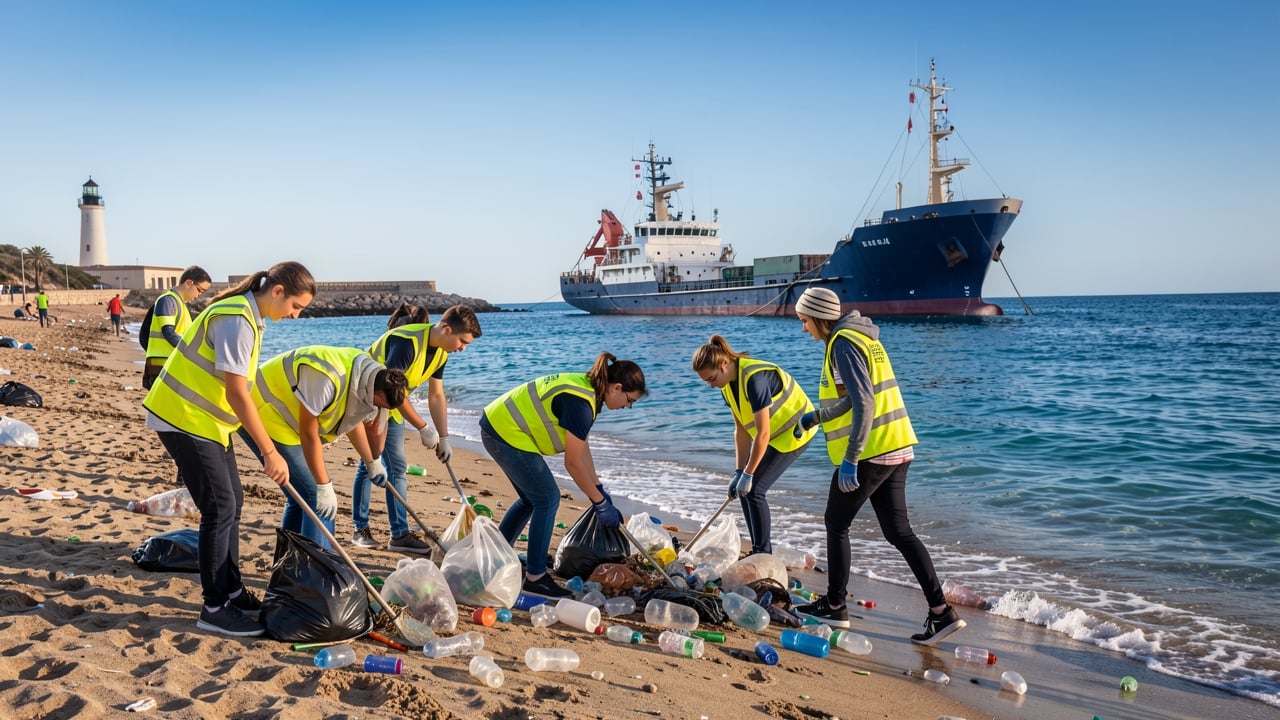
Lidl Cyprus and the AKTI Centre for Studies and Research have deepened their partnership for the 2026‑2027 academic year by taking the environmental education programme “Project Zero” beyond primary schools and into Cyprus’s higher‑education institutions. The expansion aims to move students from awareness‑raising activities to hands‑on scientific inquiry and policy development focused on marine plastic pollution.
Background
Since its inception in 2021, Project Zero has engaged more than 62,000 school‑age children across the island, combining classroom lessons on the sources and impacts of marine litter with practical beach‑clean‑up operations. To date, volunteers have removed approximately 18.6 tonnes of waste from Cyprus’s shoreline, translating knowledge into measurable environmental benefit.
From Classrooms to Coastlines
The programme’s core philosophy is that environmental stewardship must move beyond theoretical instruction. Students experience the scale of marine pollution first‑hand during supervised clean‑ups, while educators provide contextual data on waste composition and ecosystem effects. This experiential model has proven effective in fostering long‑term behavioural change among young Cypriots.
University‑Level Expansion
In the upcoming academic year, Project Zero will run four interactive workshops at leading Cypriot universities. Undergraduate participants will conduct laboratory analyses of micro‑plastics, document field observations, and compile scientific datasets that reflect current pollution levels along the Mediterranean coast.
- Hands‑on experiments: Students will isolate and identify micro‑plastic particles using microscopy and spectroscopy techniques.
- Data collection: Field teams will record plastic debris density, type, and distribution during coordinated beach surveys.
- Policy drafting: Based on their findings, participants will develop actionable recommendations for local authorities and industry stakeholders.
The AKTI Centre will publicly present the students’ proposals, giving emerging scholars a platform to influence Cyprus’s environmental agenda and to contribute to regional maritime sustainability discussions.
Strategic Significance for the Maritime Sector
By integrating academic research with community clean‑up efforts, the initiative supports the broader maritime industry’s goals of reducing plastic input into the sea and complying with EU directives on marine litter. The data generated by university teams can inform ship‑owner best practices, port‑authority waste‑management plans, and regional cooperation frameworks aimed at safeguarding the Mediterranean’s ecological health.
Continuity and Future Outlook
The sustained collaboration between Lidl Cyprus and the AKTI Centre demonstrates a scalable model for corporate‑academic partnerships in environmental stewardship. As more students transition from secondary to tertiary education, Project Zero’s impact is expected to multiply, creating a pipeline of knowledgeable professionals ready to drive innovative solutions within the maritime and logistics sectors.
Through this next phase, the programme not only educates but also empowers the next generation to become active contributors to the protection of Cyprus’s coastal waters and the wider Mediterranean sea.