
Overview of the Dutch Offshore Wind Tender
The Netherlands has launched a competitive tender for two 1‑gigawatt (GW) offshore wind farms – IJmuiden Ver Gamma‑A and Gamma‑B – within the IJmuiden Ver offshore wind zone. The programme is backed by a maximum subsidy envelope of €9.5 billion (approximately $10.4 bn), reflecting the country’s ambition to expand its renewable capacity while managing rising development costs.
Tender Structure and Financial Parameters
Applications for development permits are being accepted by the Netherlands Enterprise Agency (RVO) until 10 December 2026. The tender operates under a dual‑track system:
- Subsidy‑free auction: Bids submitted without any financial support are given priority.
- Subsidised route: If the subsidy‑free track yields insufficient interest, projects will be evaluated on the basis of the lowest subsidy request.
Maximum subsidy allocations are set at €4.758 bn for Gamma‑A and €4.698 bn for Gamma‑B, with ceiling prices of €117/MWh and €116/MWh respectively.
Infrastructure and Grid Connection
Both wind farms will share offshore grid infrastructure owned by TenneT, the Dutch transmission system operator. A 2 GW direct‑current (DC) link will transmit power to the mainland, reducing the need for duplicate cabling and simplifying operations for offshore service vessels.
Timeline and Expected Delivery
The RVO expects to award development permits in the first quarter of 2027. Construction is slated to begin shortly thereafter, with commercial operation targeted for 2032. The projects are part of a broader plan for the IJmuiden Ver zone, which aims to host roughly 6 GW of capacity.
Implications for the Maritime and Shipping Sectors
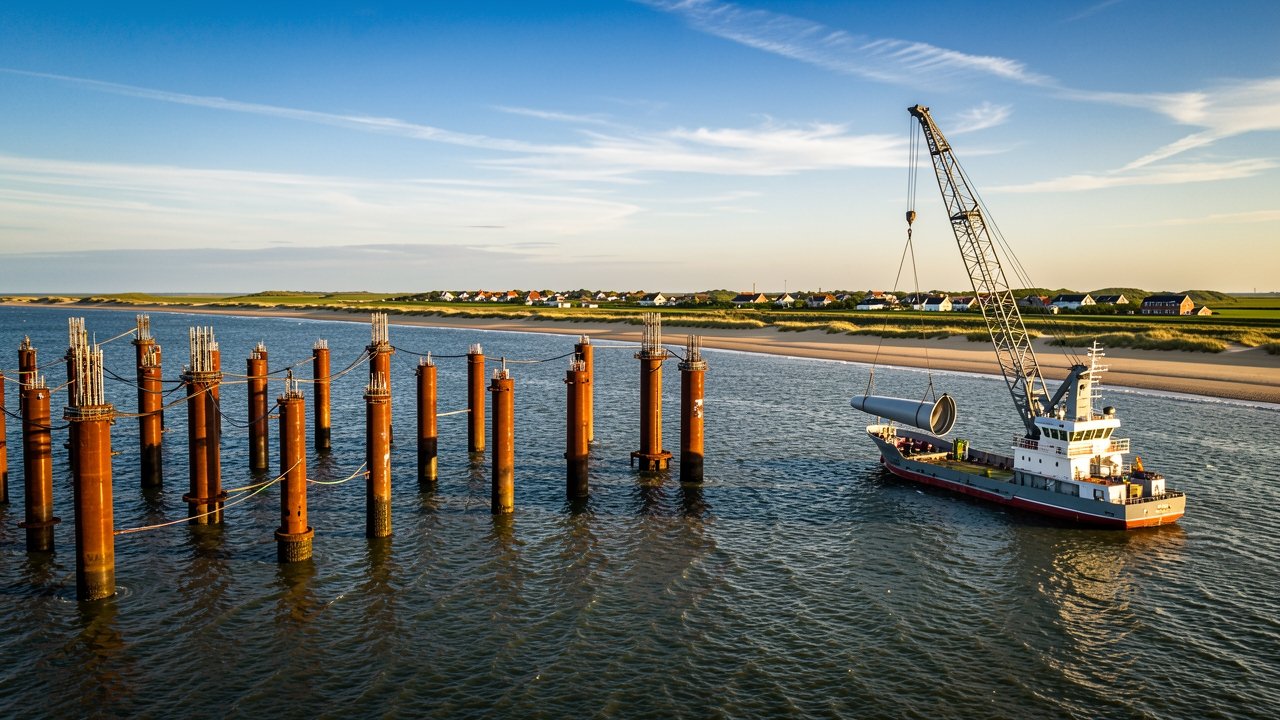
The tender’s scale will generate sustained demand for specialised vessels, including turbine installation ships, heavy‑lift cranes, and crew transfer vessels. Port facilities in the Rotterdam‑Scheldt area are likely to see increased activity for staging equipment and materials. Moreover, the shared grid infrastructure reduces the number of offshore cable‑laying operations, potentially easing congestion in the busy North Sea maritime traffic lanes.
Strategic Context
This tender is conducted under a temporary offshore wind support mechanism, bridging the gap until the Netherlands adopts a contract‑for‑difference (CfD) scheme projected for mid‑2027. The increased subsidy ceiling reflects the government’s response to higher turbine prices and upcoming grid‑usage charges.
Stakeholders in the shipping, port, and logistics sectors should monitor the tender’s outcomes closely, as the awarded contracts will shape vessel demand, port throughput, and ancillary services for the next decade.