
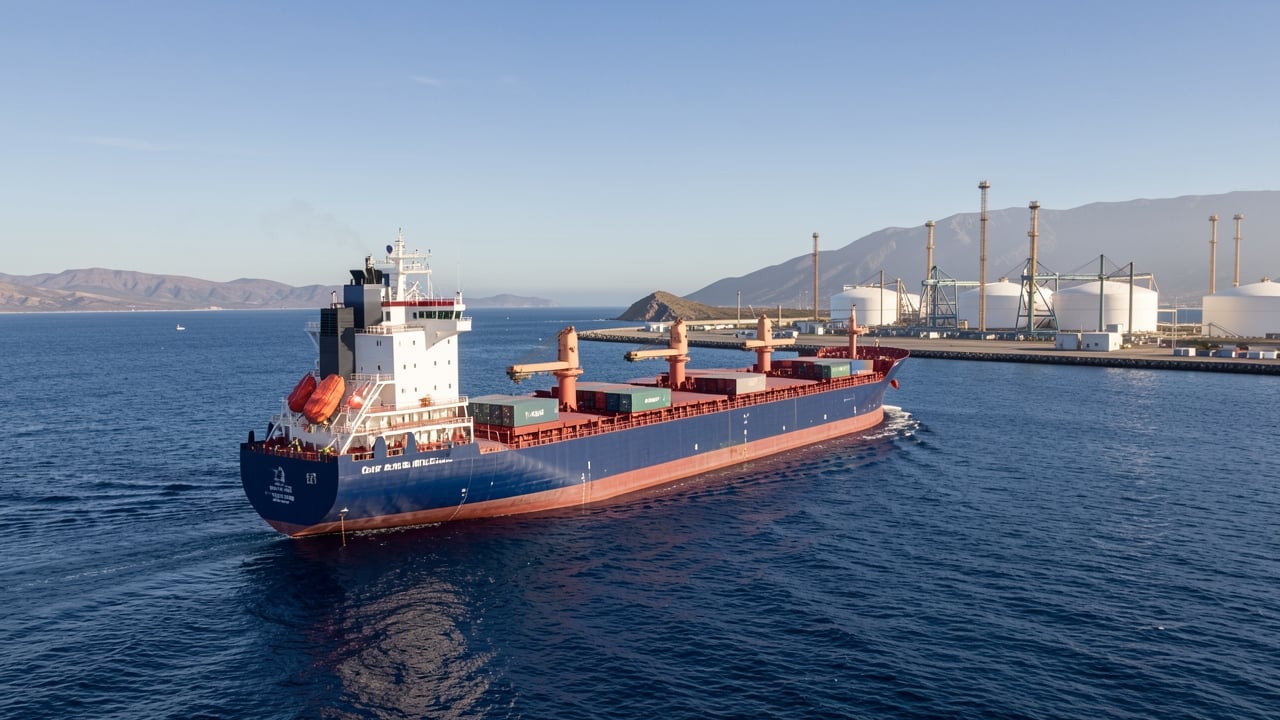
Pacific LNG Trade Gains Momentum
The global LNG shipping market is witnessing a strategic shift as Mexico’s first Pacific‑coast liquefaction facility begins commercial operations. The development, known as Energía Costa Azul (ECA) LNG, provides a new export corridor that could reshape supply dynamics between the United States, Asia, and Europe.
Strategic Context
Intermodal’s latest weekly outlook highlights three overlapping challenges shaping the market: disruptions to Middle‑Eastern gas flows, an uncertain recovery trajectory for Qatari LNG, and historically low European gas inventories. Together, these factors are prompting importers to seek more flexible, reliable supply options.
With U.S. LNG exporters increasingly caught between European and Asian demand, routes that offer shorter transit times and lower geopolitical risk are becoming highly attractive. The Pacific corridor, anchored by the ECA terminal near Ensenada, offers precisely that advantage.
Mexico’s First Pacific‑Coast Facility
Commissioned in early July 2026, the 3.25 mtpa single‑train plant receives feedgas from the U.S. Permian Basin via a cross‑border pipeline. Its inaugural cargo was dispatched to South Korea, marking the first Pacific‑oriented export of U.S. LNG that bypasses the traditional Gulf Coast corridor.
Although technical inspections delayed full commercial completion to the fourth quarter of 2026, the facility now stands as a viable alternative to Panama Canal transits and Cape of Good Hope diversions, promising reduced voyage duration and lower freight costs.
Operational Constraints and Future Outlook
Senior Analyst Nikos Tagoulis notes that while the geographical advantage is clear, the terminal’s modest capacity and existing import‑regasification commitments through 2028 limit near‑term expansion. The Ensenada complex primarily serves as an import hub; adding export capacity must be balanced against its core function.
Nevertheless, the strategic relevance of a Pacific gateway is undeniable. The project lays groundwork for larger-scale developments, such as the proposed AMIGO LNG floating terminal off Guaymas, Sonora, which could add up to 5.2 mtpa of export capacity using U.S. feedgas for Asian markets.
Implications for Vessel Operators
- Shorter round‑trip voyages from the Gulf of Mexico to East Asia improve vessel utilisation rates.
- Reduced exposure to geopolitical hotspots in the Middle East and the congested Panama Canal corridor.
- Potential for new charter opportunities focused on Pacific‑oriented routes.
As the Pacific LNG corridor matures, shipowners and charterers will likely recalibrate fleet deployment strategies to capture the efficiency gains offered by this emerging trade lane.
Conclusion
ECA’s inaugural shipments signal the start of a new era for Pacific LNG trade, providing a geopolitically safer, cost‑effective pathway for U.S. gas to reach Asian markets. While immediate volumes remain modest, the project’s strategic importance sets the stage for further capacity expansions and a re‑orientation of global LNG shipping routes.