
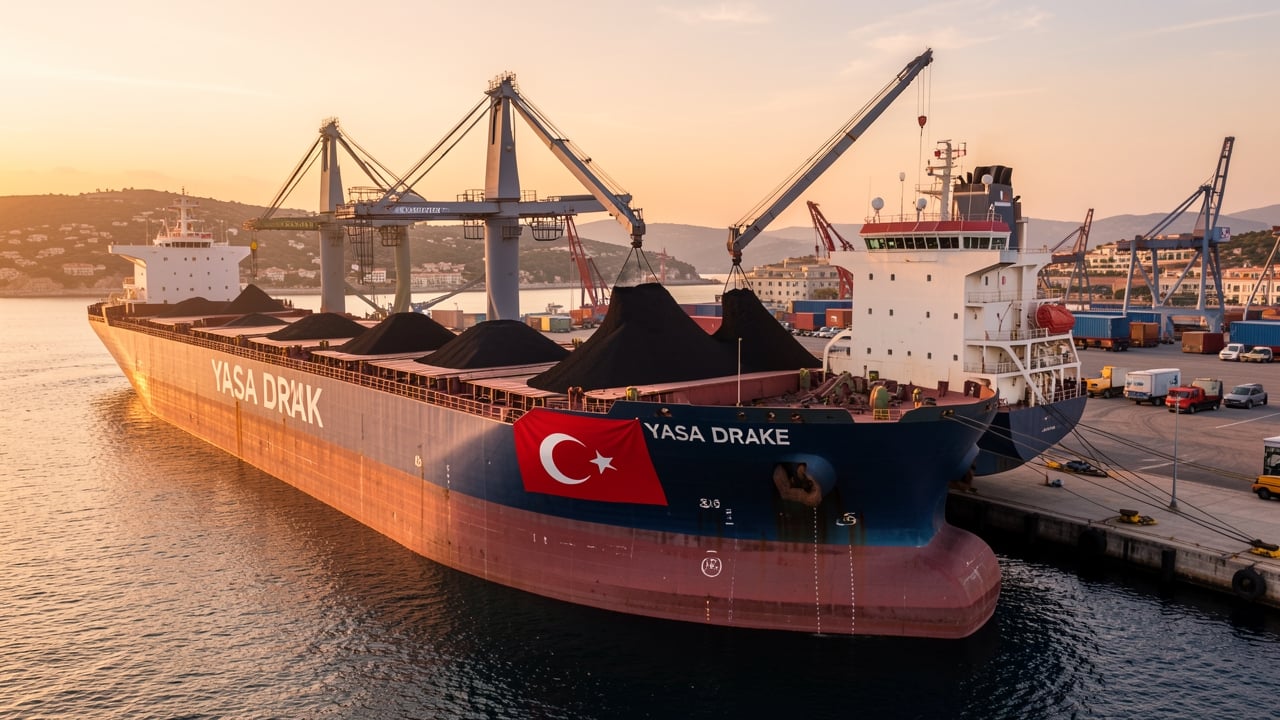
Final two vessels transferred to Yasa Shipping
Turkish bulk carrier operator Yasa Shipping has taken delivery of the last two ships from Rio Tinto’s eight‑strong Newcastlemax fleet. The 2013‑built bulkers, formerly known as RTM Drake and RTM Tasman, are now listed as Yasa Drake (205,437 dwt) and Yasa Pioneer (205,432 dwt).
Background of Rio Tinto’s fleet rationalisation
Rio Tinto began divesting its owned Newcastlemax vessels earlier in 2026 as part of the miner’s first large‑scale bulker disposal programme in more than a decade. The strategy reflects a shift toward a predominantly charter‑based freight model; the company projects that by 2025 it will operate around 230 chartered vessels, moving over 300 million tonnes of ore annually.
Previous disposals and current Yasa holdings
In April, Rio Tinto transferred the sister ships RTM Cartier and RTM Zheng to Yasa Shipping, which now appear as Yasa Team and Yasa Unity. A few weeks later the 2013‑built RTM Cabot joined the fleet as Yasa Fortune. With the latest addition of Yasa Drake and Yasa Pioneer, Yasa now operates five former Rio Tinto vessels alongside its existing 207,805 dwt Yasa Dream, bringing its total Newcastlemax count to six.
Yasa’s expanded dry‑bulk portfolio
According to the company’s official fleet register, Yasa currently manages 43 dry‑bulk carriers with a combined deadweight of approximately 3.56 million tonnes. The recent acquisitions underline the Turkish group’s aggressive expansion in the large‑bulker segment, positioning it as a notable player in Mediterranean and Black Sea trade routes.
Other recent transactions
- RTM Dampier and RTM Columbus were sold to Swiss commodity trader Mercuria for an estimated $88 million and have been renamed Adamello and Cristallo.
Rio Tinto’s future vessel strategy
Although the miner has exited direct ownership of its older Newcastlemaxes, it is not abandoning the size class. In April, Rio Tinto signed charter agreements with Japan’s NS United Shipping for two methanol‑ready, dual‑fuel Newcastlemax vessels slated to join its transport fleet from 2028, supporting the company’s decarbonisation goals.
Conclusion
The completion of the eight‑ship sell‑down marks a pivotal moment in Rio Tinto’s logistics approach, reinforcing its reliance on chartered capacity while providing Yasa Shipping with a significant boost to its Newcastlemax fleet. The transaction also highlights the ongoing consolidation within the global dry‑bulk market, where operators are seeking scale to meet evolving demand and regulatory pressures.