
Background and Strategic Support
The European Union's Common Agricultural Policy (CAP) remains a cornerstone for Cyprus, linking agriculture and livestock to the island's cultural identity, local economy, and environmental stewardship. Under the CAP framework, the Eat Wisely Cyprus initiative—co‑financed by the EU and implemented by the Ministry of Agriculture—promotes healthy eating and sustainable farming practices.
Riverland Bio Farm: Origins
Sixteen years ago, Vasilis Kyprianou, a graduate in animal production with experience on Irish farms, envisioned an organic dairy operation close to Nicosia. Leveraging the EU Rural Development Programme 2007‑2013, he secured funding that enabled the establishment of Riverland Bio Farm in the village of Kampia, a few kilometres north of the capital.
Core Business and Product Portfolio
Specialising in certified organic milk, the farm processes the raw product into a range of high‑value items, most notably kefir, recognised for its nutritional benefits and export potential. The focus on kefir also provides a differentiating edge in international markets that increasingly demand functional, probiotic dairy products.
Location Advantages and Environmental Commitment
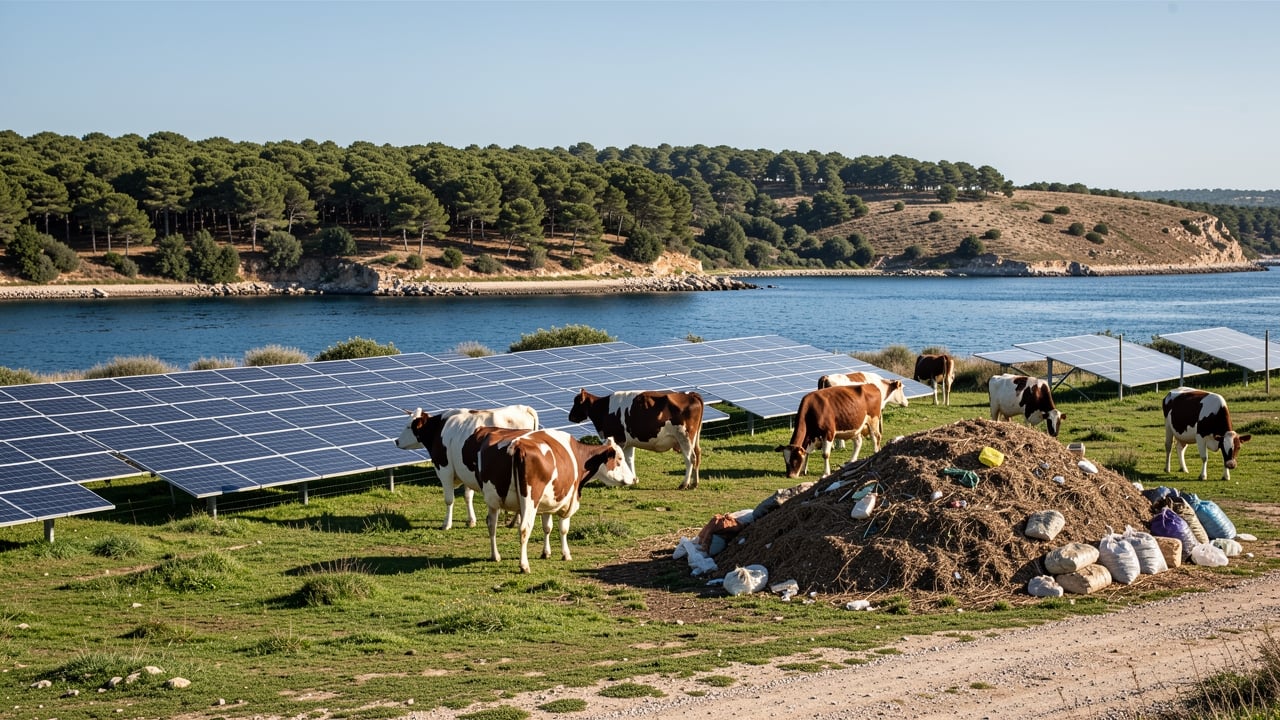
Kampia was deliberately chosen for its low pesticide pressure and proximity to the Machairas forest, ensuring a pristine environment for the herd. Sustainability is embedded in daily operations: the farm runs a composting system, harvests rainwater, and generates roughly double the energy it consumes through a photovoltaic array. This circular model reduces waste, minimises external inputs, and aligns with the EU’s Green Deal objectives.
Organic Livestock Management
The herd grazes on natural pastures and receives feed made from on‑farm cultivated herbs and fodder, fully complying with organic livestock standards. Regular inspections by national certification bodies guarantee that animal welfare and product quality start at the source.
Integrated Biological Systems
- Closed‑loop compost transforms plant residues into nutrient‑rich soil amendments.
- Rainwater collection supplies irrigation, lowering freshwater demand.
- Solar panels offset the farm’s electricity consumption and feed surplus power into the grid.
- Crop rotation and cover cropping preserve soil fertility and enhance biodiversity.
Implications for Maritime Trade and Logistics
Riverland Bio Farm’s adherence to rigorous EU organic standards positions it as a reliable supplier for regional and European markets. The farm’s proximity to the Limassol and Larnaca ports facilitates efficient refrigerated cargo flows, supporting Cyprus’s ambition to become a hub for high‑quality agri‑food exports. By integrating sustainable production with streamlined logistics, the farm contributes to a resilient supply chain that can adapt to evolving consumer and regulatory demands.
Future Outlook
Looking ahead, the farm aims to expand its product range, increase renewable energy capacity, and explore partnerships with shipping agents to optimise cold‑chain transport. Riverland Bio Farm exemplifies how organic agriculture, when paired with circular resource management and strategic logistics, can drive both environmental stewardship and economic growth on the island.