
Offshore Planning Consent Secured for Muir Mhòr
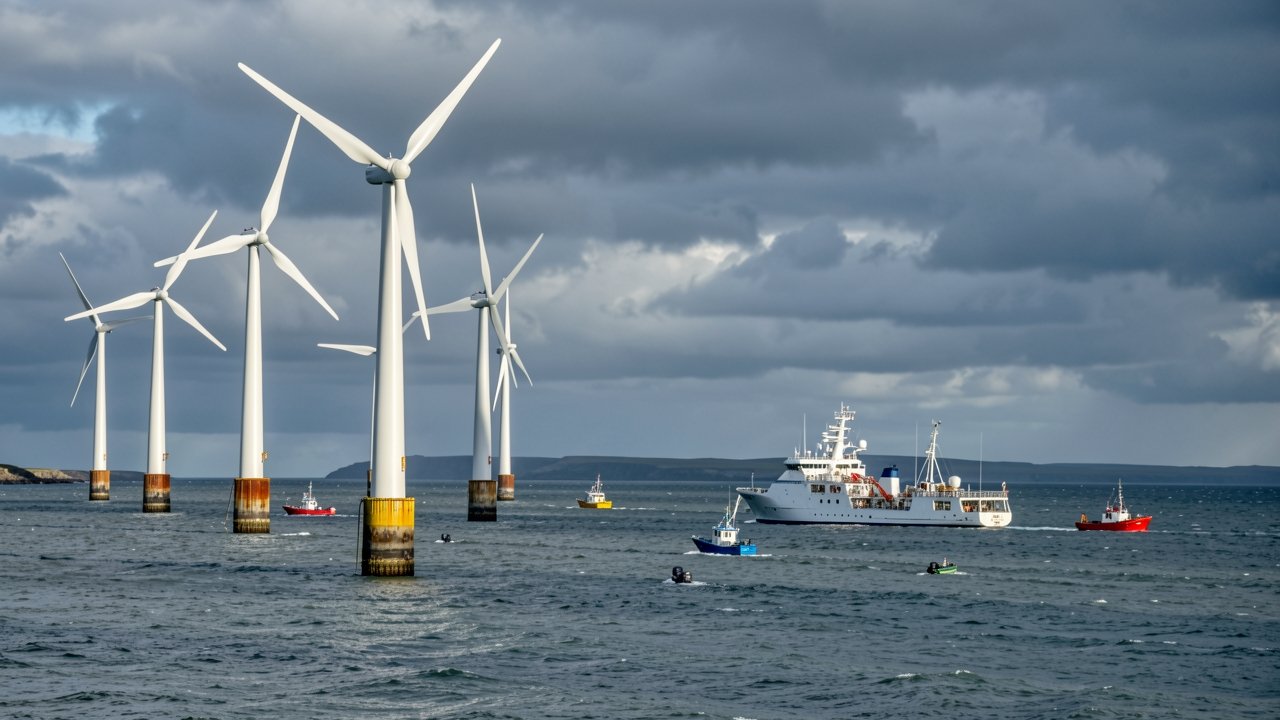
The Scottish Government has issued offshore planning consent for the 1 GW Muir Mhòr floating wind farm, a project being developed by Fred. Olsen Seawind off the Aberdeenshire coast. Situated roughly 63 km east of Peterhead, the development will host up to 67 floating turbines capable of supplying electricity equivalent to the annual consumption of about 1.2 million homes.
Project Background and Ownership
Muir Mhòr earned its seabed rights in the 2022 ScotWind leasing round, positioning it as one of Scotland’s most advanced commercial‑scale floating wind proposals. Earlier this year, Fred. Olsen Seawind acquired full ownership after purchasing Vattenfall’s 50 % stake, consolidating control over the project's future direction.
Timeline and Investment Milestones
The developer targets the early 2030s for the commencement of electricity generation, subject to final investment decisions and further commercial arrangements. To date, the project has awarded £18.4 million in development contracts, of which £7.96 million has been allocated to Scottish suppliers, underscoring the programme’s domestic economic impact.
Regulatory Conditions and Stakeholder Concerns
The consent is accompanied by conditions aimed at mitigating potential effects on commercial fisheries and seabird populations. The Scottish Fishermen’s Federation has expressed reservations, questioning the safety of fishing operations around the floating foundations, mooring lines, and subsea cables.
Strategic Significance for Scotland’s Offshore Wind Ambitions
Scotland now has more than 11 GW of offshore wind capacity with consent, reinforcing its position as a European leader in renewable energy. While Muir Mhòr still awaits a final investment decision, the planning approval represents a critical milestone that moves the project closer to commercial reality.
Implications for Maritime and Shipping Sectors
Floating wind farms introduce new navigation considerations for vessels operating in the North Sea. Shipping agencies, port authorities, and logistics providers must adapt to emerging routing guidelines, cable avoidance zones, and potential coordination with offshore service vessels tasked with turbine installation and maintenance.
As the project progresses, ongoing dialogue between developers, regulators, and marine stakeholders will be essential to balance renewable energy growth with safe and sustainable maritime activities.