
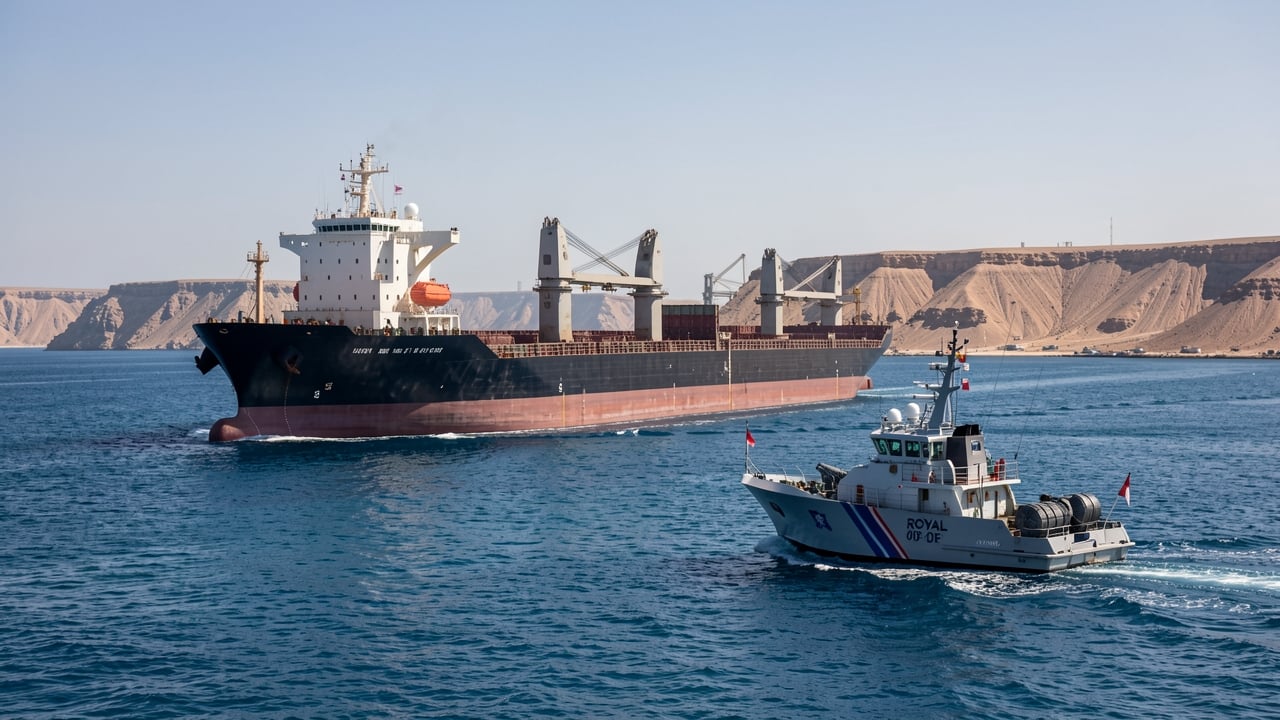
Fatal Strike on Capesize Bulk Carrier in Hormuz
At approximately 06:30 UTC on 23 September, the Antigua‑and‑Barbuda‑flagged bulk carrier Cape Dao was struck while transiting the Strait of Hormuz, off Oman’s Musandam Peninsula. The impact ignited a fire in the engine room, disabling the vessel and leaving it drifting in the busy waterway.
Casualties and Crew Rescue
Rescue operations were promptly launched by a Royal Navy of Oman patrol craft, which evacuated all 27 crew members. Tragically, an Indian seafarer lost his life in the incident, while 19 other Indian nationals were among those rescued, as confirmed by the Indian embassy in Muscat. The identity of the attacker remains undetermined.
Recent Wave of Attacks in the Region
The Cape Dao incident follows a spate of assaults on merchant vessels in the Hormuz corridor. In the preceding days, the Isle of Man‑registered tanker LR Stephanie was hit by an unidentified projectile, injuring two crew members, and the LPG carrier Al Maryah suffered damage from falling debris. According to the International Maritime Organization (IMO), at least 80 hostile actions against commercial shipping have been recorded since the escalation of the conflict.
Strategic Implications for Global Trade
The Strait of Hormuz remains a chokepoint for roughly 20 % of the world’s petroleum flow. Repeated disruptions raise concerns for carriers, charterers, and insurers, prompting many operators to reconsider routing options and security measures. The latest casualty underscores the heightened risk for vessels of all sizes, from tankers to bulk carriers.
Alternative Supply Routes Gaining Momentum
Amid the turmoil, Saudi Arabia has resumed partial operations of its East‑West crude pipeline, offering a land‑based alternative that bypasses Hormuz. The pipeline, which delivers oil to the Red Sea port of Yanbu, is currently operating at reduced capacity, but Saudi Aramco aims to restore volumes close to the pre‑drone‑attack level of roughly 4 million barrels per day. Full normalization may still require several weeks.
Industry Response and Outlook
- Ship owners are enhancing onboard security protocols and reviewing insurance coverage for war‑risk.
- Chartering firms are monitoring the situation closely, with some clients opting for slower, longer routes to avoid the high‑risk zone.
- Maritime authorities in the Gulf are increasing patrols and encouraging vessels to report any suspicious activity immediately.
While the immediate focus remains on the safety of the crew and the salvage of the Cape Dao, the broader pattern of attacks signals a volatile operating environment in one of the world’s most critical maritime passages.