
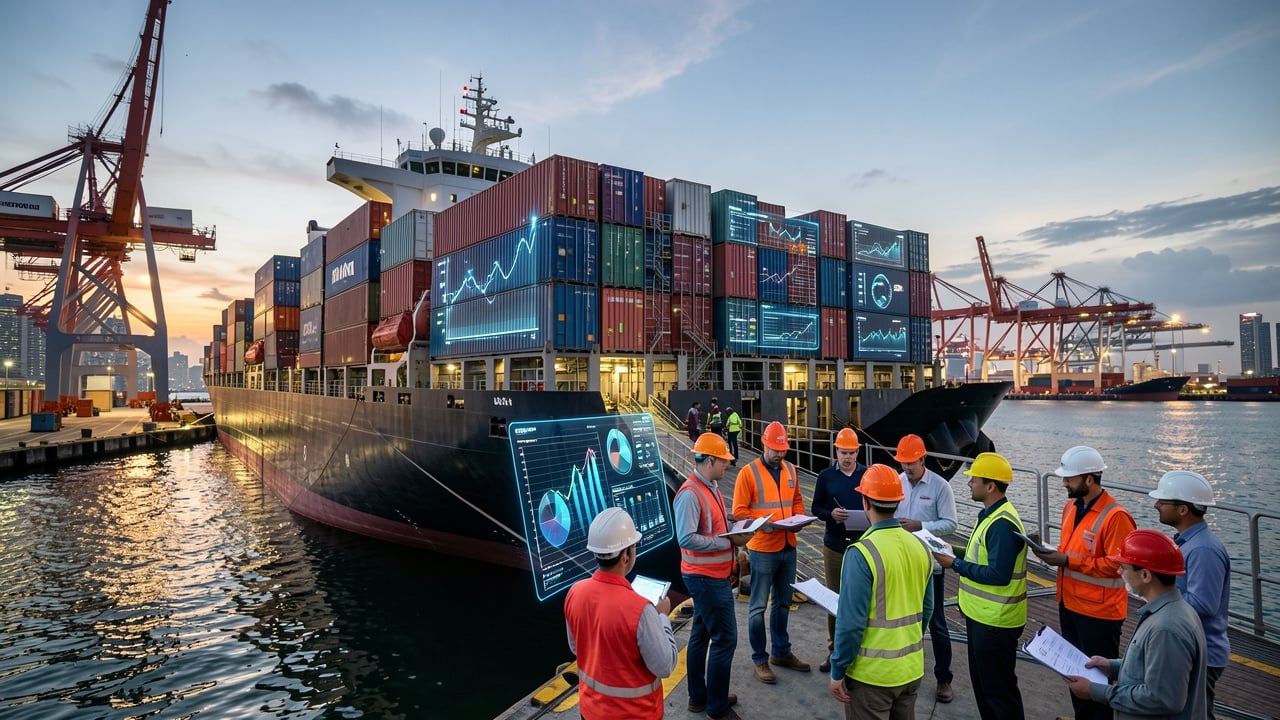
During the opening session of Splash Singapore, senior leaders from the global shipping sector gathered to discuss how the industry is adapting to an unprecedented convergence of geopolitical, technological and regulatory pressures. The dialogue underscored a fundamental shift: moving away from a pure "just‑in‑time" mindset toward a more defensive "just‑in‑case" approach that prioritises flexibility, redundancy and long‑term scenario planning.
Strategic Re‑orientation in a Volatile World
Bjorn Højgaard, CEO of Anglo‑Eastern Univan Group, observed that traditional forecasting has become increasingly unreliable. Rather than attempting a single prediction for 2035, his company conducted a dual‑scenario exercise, envisioning two divergent futures and identifying the capabilities needed to thrive in each. This exercise led to concrete actions, such as establishing a parallel data centre in Singapore to complement Hong Kong servers, and diversifying banking relationships across multiple jurisdictions.
From Just‑in‑Time to Just‑in‑Case
Højgaard summed up the new philosophy: "It's less about predicting the exact future and more about building optionality that can accommodate multiple outcomes." By embedding redundancy into critical systems, Anglo‑Eastern aims to safeguard operations against regional disruptions, cyber‑attacks, or sudden regulatory shifts.
Re‑evaluating Risk Across the Shipping Cycle
Hor Weng Yew, Managing Director of Pacific Carriers Limited and chairman of the Singapore Maritime Foundation, warned that historic shipping‑cycle assumptions no longer hold. "Cycles are now more intense, shorter and far more extreme," he said. Consequently, Pacific Carriers is tightening its risk appetite, focusing on asset‑level and operational exposures while avoiding long‑term bets on propulsion technology that could become obsolete.
Governance as an Operational Tool
Jeremy Sutton, CEO of Swire Shipping, highlighted how governance structures have been transformed from periodic, paperwork‑heavy exercises into daily operational tools. Risk reviews that were once quarterly now occur weekly, with external experts such as P&I clubs regularly consulted. Swire has also delegated decision‑making authority to frontline crews, introducing "stop‑work" cards that have already driven a 20‑25% rise in reported safety concerns, demonstrating a proactive safety culture.
Decarbonisation and the Long‑Term North Star
Nick Potter, President and CEO of AET, stressed the importance of balancing short‑term agility with a clear long‑term vision. "Our North Star is 2050 net‑zero," he asserted. AET is leveraging a robust balance sheet, AI‑driven analytics, and a portfolio of 57 retrofit projects across 25 decarbonisation technologies to ensure that today's investment decisions align with future emissions targets.
Diversification Without Compromising Discipline
John Su, Group Chairman of Erasmus Shipinvest, illustrated that growth can coexist with prudence. Despite expanding into dry bulk, container, multipurpose and gas vessels, he reminded peers to "always think about how to survive a low‑cycle market"—a mantra that keeps expansion grounded in financial resilience.
Decentralisation as a Competitive Edge
Shmuel Yoskovitz, CEO of X‑Press Feeders, concluded that decentralising decision‑making is becoming a critical differentiator for liner operators. By empowering regional hubs and local managers, companies can react faster to port congestions, regulatory changes, or sudden market shifts, reinforcing the overall agility of the fleet.
Collectively, the insights shared at Splash Singapore signal a maritime industry that is no longer content with reactive measures. Instead, it is proactively redesigning its risk framework, investing in digital and green technologies, and empowering its workforce to navigate an increasingly complex operating environment.