
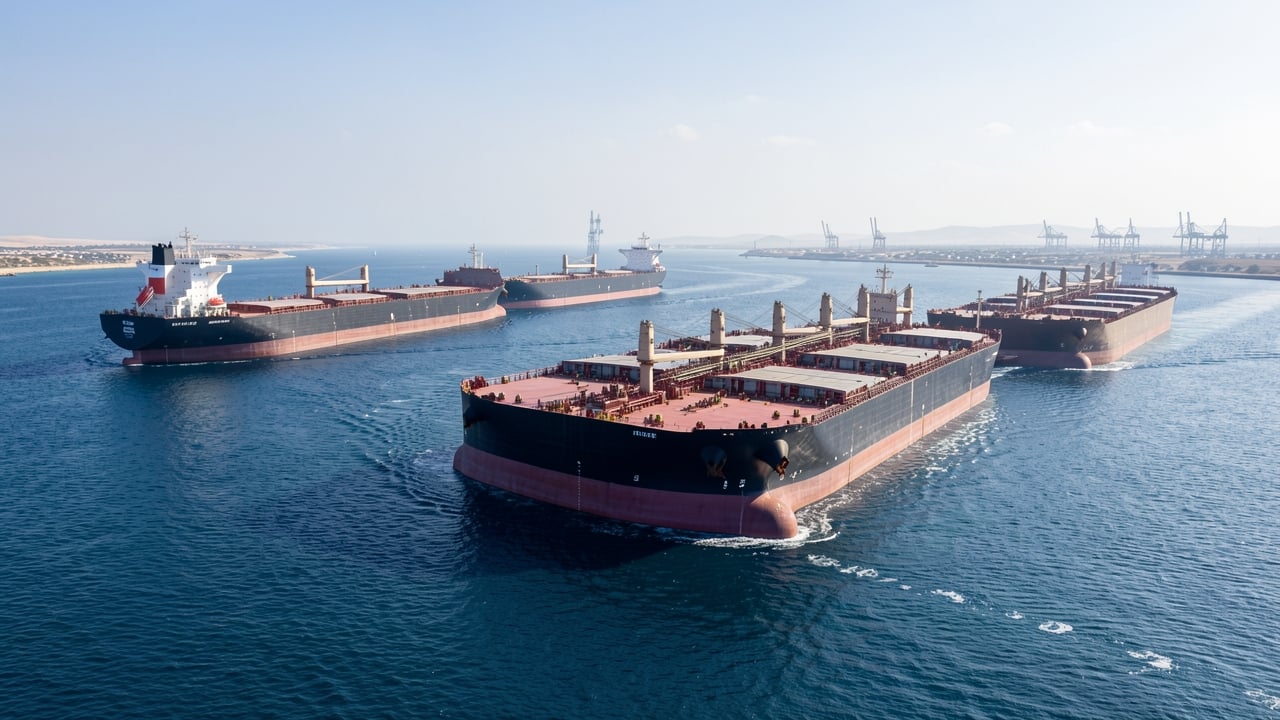
Record Tanker Rates Inflate Shipping Liabilities for Global Oil Majors
The unprecedented surge in tanker freight rates, triggered by the Middle East conflict, is eroding profit margins for the world’s leading oil producers. Recent quarterly filings reveal that the cost of chartering vessels has become a significant non‑cash expense, adding billions of dollars to balance‑sheet liabilities.
Shell’s $5.4 bn Lease‑Liability Spike
Shell disclosed a $5.4 bn non‑cash increase in shipping lease liabilities for Q3 2026. The adjustment stems from index‑linked charter contracts that must be re‑valued at current spot rates, which have exploded since the outbreak of hostilities in the Gulf. Since the start of the year, the total increase in Shell’s shipping lease liabilities approaches $7.7 bn, although the company stresses that these are accounting entries rather than immediate cash outlays.
Freight Costs Ripple Through the Industry
Shell’s CFO, Sinead Gorman, highlighted that freight rates on the Middle East‑China lane are now roughly ten times the levels of a year ago, directly squeezing refining, chemicals and crude‑trading margins. Despite this pressure, Shell reported adjusted Q3 earnings of $10.8 bn, more than double the prior‑year figure, thanks to exceptionally strong refining spreads.
At TotalEnergies, CEO Patrick Pouyanné noted that shipping costs have leapt from $2‑$3 per barrel to about $25 per barrel, shaving roughly $6 per barrel from the company’s liquids price realisations. The French group mitigates some exposure through fixed‑rate medium‑ and long‑term charters covering around 40 % of the crude it lifts, enabling traders to profit from moving Iraqi cargo through the Strait of Hormuz.
Italy’s Eni reported a Q3 refining adjusted operating profit of €730 m, buoyed by high margins and robust plant utilisation. However, the company warned that the gains were partly offset by higher freight expenses and adverse crude differentials, which were factored into its margin calculations.
Norway’s Equinor experienced a more direct impact on its trading division, swinging to an adjusted operating loss of $96 m in Q3 after a $355 m profit in the preceding quarter. The loss was attributed to derivative positions that suffered in the ultra‑tight shipping market, outweighing strong product‑trading performance.
Market Outlook Remains Bullish
At the Maritime CEO Forum in Monaco, tanker owners signalled no intention of easing rates. Arrow analyst Burak Cetinok calculated that VLCC earnings this month are 14 times the ten‑year average, with weekly multiples nearing 20. DHT Holdings’ CEO Svein Moxnes Harfjeld argued that an ageing VLCC fleet – nearly half will be over 15 years old by 2029 – will sustain a tight supply‑demand balance, underpinning rates.
Industry observers such as Alberta Shipmanagement’s Alexia Inglessis point to recovering Middle Eastern oil flows, strong Chinese demand, depleted inventories and sanction‑related inefficiencies as further catalysts for continued freight‑rate strength.
In summary, while oil majors continue to generate strong earnings on the refining side, the soaring cost of moving crude remains a formidable headwind, translating into substantial non‑cash liabilities and tighter profit margins across the sector.