
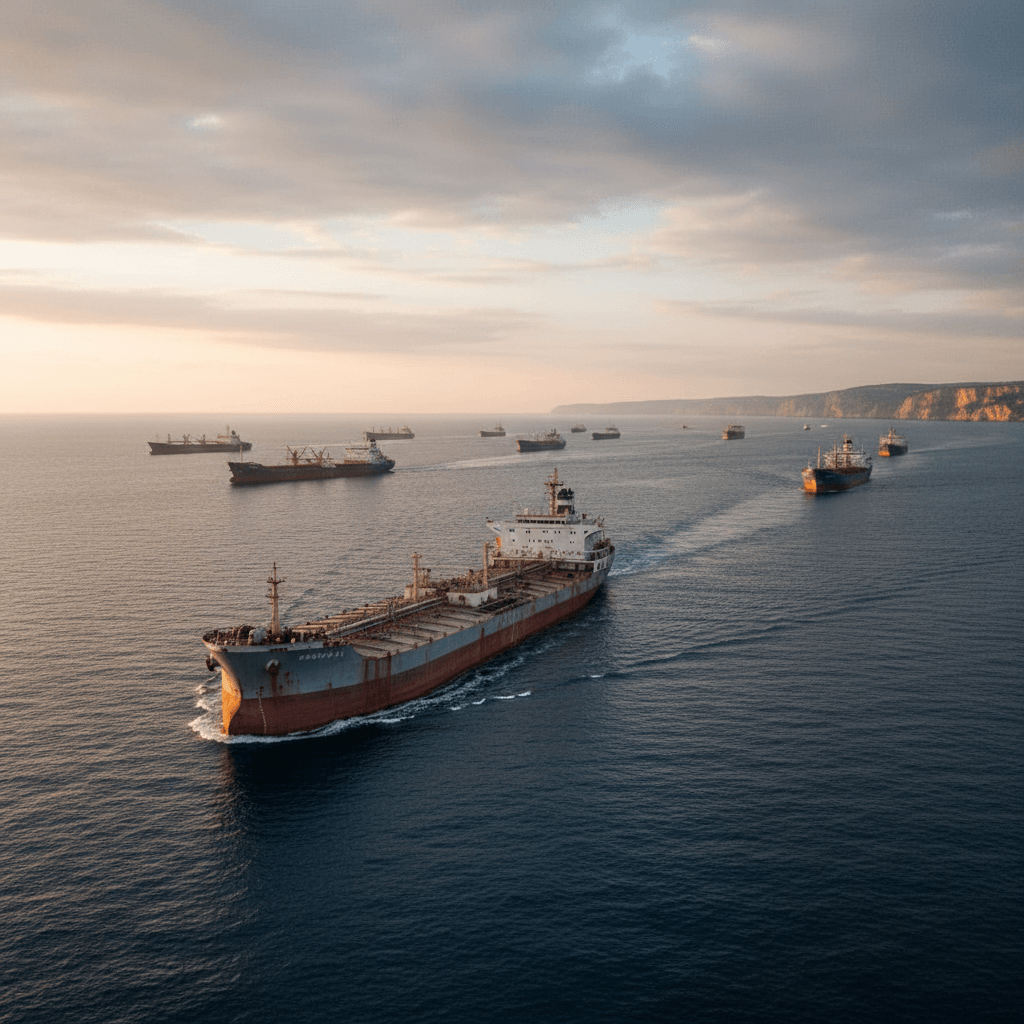
More than two decades after the devastating Prestige tanker disaster, concerns are mounting over Spain’s perceived lack of a robust policy regarding the "dark fleet." Recent incidents involving stateless or falsely registered tankers in Spanish waters have highlighted a growing environmental and security risk that experts warn could lead to a repeat of past tragedies.
\n\nThe Shadow Fleet Threat in Strategic Corridors
\nSpain remains one of the most exposed nations in the European Union due to its geographic position. The country manages critical maritime arteries, including the Finisterre traffic separation scheme in the north, the Strait of Gibraltar, and the waters surrounding the Canary Islands. Despite the high volume of transit, analysts point out that current maritime policies may not be resilient enough to counter the risks posed by the increasing number of "ghost tankers" carrying sanctioned Russian oil.
\n\nContrasting Approaches to Maritime Enforcement
\nWhile neighboring France has taken decisive action by seizing vessels sailing under false registrations—such as the Grinch—and the UK maintains a firm stance in Gibraltar, Spain’s response has been characterized as more cautious. This has led to international scrutiny, particularly following incidents where sanctioned vessels were "herded" through the Mediterranean rather than intercepted.
\n\n- \n
- The Chariot Tide Incident: In January, a tanker flying a false Mozambican flag went adrift near Tangier during a gale. While Spanish maritime security successfully prevented a spill, the vessel was allowed to continue its journey to Egypt despite its blacklisted status. \n
- The Deyna Passage: More recently, the Aframax tanker Deyna, carrying nearly one million barrels of Russian crude, transitioned through the Strait of Gibraltar with no reported naval intervention, despite its high-risk rating and lack of reputable classification. \n
Economic and Environmental Vulnerability
\nThe reluctance to implement more aggressive seizure policies is viewed as a paradox for an economy heavily dependent on coastal tourism. A single major spill from a shadow fleet vessel—often older ships with questionable insurance and maintenance records—could cause irreparable damage to Spain’s "sun and beach" tourism sector.
\n\nAs the "dark fleet" continues to expand, involving an average of three to four tankers per day passing through the Strait, the maritime industry is calling for more coordinated European oversight. Without a dedicated coast guard or a proactive naval deployment policy for these specific administrative infringements, the Mediterranean remains a high-stakes corridor for global shipping.
\n\nConclusion
\nThe lessons of 2002 serve as a reminder that maritime safety requires constant vigilance. For agencies and operators in the Mediterranean, the rise of the shadow fleet represents not just a regulatory challenge, but a significant operational risk that demands a harmonized regional response to ensure the safety of our seas and shorelines.