
Background
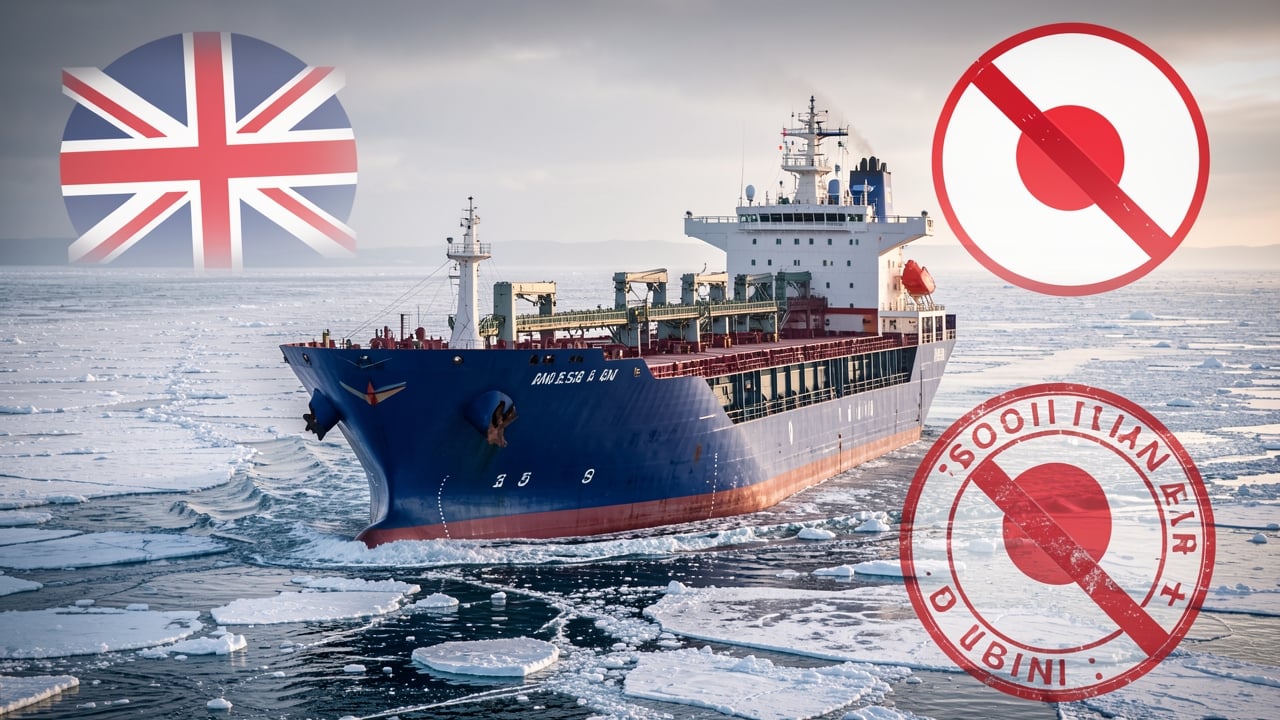
In early October 2026, both the United Kingdom and Japan intensified pressure on Sovcomflot, Russia’s biggest state‑owned shipping company. Rather than sanctioning the entire group, the two jurisdictions began naming individual vessels – LNG carriers in London and oil tankers in Tokyo – as part of a broader effort to choke off Russian energy exports.
UK Measures
On 1 October the UK added 31 entries to its Russia sanctions list, including eight Sovcomflot ships and the Singapore‑based chartering arm of Novatek, Novatek Gas and Power Asia. The vessels were singled out because they transport, or are expected to transport, Russian‑origin LNG to third‑party markets. The list comprised three new Arc7 ice‑class carriers – ALEKSEY KOSYGIN (IMO 9904546), KONSTANTIN POSIET (IMO 9904704) and PYOTR STOLYPIN (IMO 9904675) – alongside three older conventional carriers – CHAIVO (IMO 9331048), PORTOVYY (IMO 9246621) and AVACHA (IMO 9319404).
Notably, the UK listed PYOTR STOLYPIN before the ship had completed any cargo run, signalling that a vessel’s projected role in a Russian LNG project is sufficient for sanctioning.
Japanese Actions
A day after the British announcement, Japan imposed its own sanctions on a set of Russian vessels and froze assets of 33 Russian entities and nine individuals. While the Japanese package focused on oil tankers, it mirrored the UK approach by targeting ships owned, operated, or otherwise linked to Sovcomflot, including the newly‑built Arc7 fleet.
Impact on Arctic LNG 2
Kpler data show that Arctic LNG 2 has exported roughly 0.95 million tonnes (mt) in 2026 – almost double the total for 2025 – with 14 cargoes moved by 13 vessels between 17 July and 5 October. All known destinations were in China, primarily to Beihai LNG (PipeChina). Two of the sanctioned ships, ALEKSEY KOSYGIN and AVACHA, were among those listed by the UK.
While ALEKSEY KOSYGIN had completed a single direct international export before being listed, it had already been active in moving cargoes from Arctic LNG 2 to the Saam floating storage unit at Murmansk – a movement that does not count as an export because the cargo remained within Russian waters.
Market Implications
- Sanctions can now be applied before a vessel begins commercial operations, increasing compliance risk for charterers and insurers.
- Targeting ships individually makes it more difficult for operators to re‑flag or transfer ownership to evade restrictions.
- The approach foreshadows stricter UK and EU LNG controls slated for 1 January 2027.
Outlook
With the UK and Japan moving from company‑wide to vessel‑specific measures, the maritime sector must enhance due‑diligence procedures. Shipping agents, charterers, and financiers are advised to monitor sanction lists closely and verify vessel histories before entering into contracts involving Russian‑linked carriers.