
Background of the Dispute
The British Ports Association (BPA) has formally rejected a recent analysis from Spain’s EU ETS Observatory that links the rise in UK container volumes to vessels seeking to avoid the European Union Emissions Trading System (EU ETS). The BPA warns that the EU’s proposed anti‑evasion rules could inadvertently penalise billions of pounds of recent investment in British terminals.
Investment‑driven Growth, Not Carbon‑driven Diversion
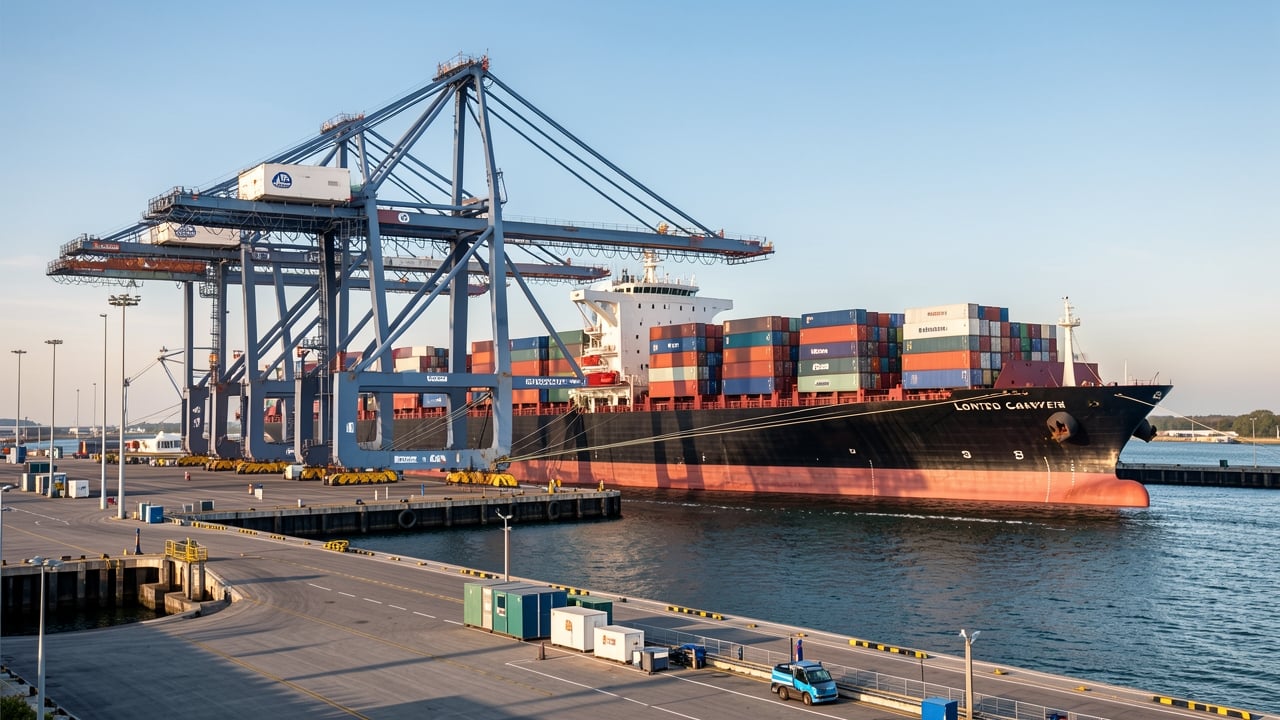
According to the BPA’s own data, roughly 85 % of the United Kingdom’s container traffic increase projected for 2025 will be concentrated around London. The catalyst is the fourth berth at DP World’s London Gateway, a £350 million addition that entered service in late 2024. Government statistics show a 11 % rise in container handling across UK ports last year – an extra 600,000 TEU – with London accounting for about 500,000 of those units.
London Gateway processed more than 3 million TEU in 2025, a 52 % jump from the previous year, thanks to the new berth and the launch of Asia‑Europe services by Maersk and Hapag‑Lloyd’s Gemini Cooperation in early 2025.
Changing Market Dynamics
The expansion at London Gateway is reshaping the national hierarchy of boxports. Maersk’s decision to pull out of the Hutchison‑operated Felixstowe terminal has opened space for DP World’s facility to challenge the historic leader. DP World is also advancing a £1 billion expansion that will add two all‑electric berths and a second rail terminal, further boosting the UK’s handling capacity.
EU’s Methodology Under Scrutiny
The Spanish study measured the UK’s share of northern‑European deep‑sea activity using TEU‑miles – a metric that multiplies vessel capacity by voyage distance. It reported an increase from 17.5 % in 2023 to over 30 % by mid‑2025, and suggested that 76 % of observed route changes were driven by the EU ETS.
The BPA counters that TEU‑miles reflect network activity rather than actual cargo volumes and can be skewed by longer routes (e.g., around the Cape of Good Hope) or altered port call sequences. Moreover, the association argues that the analysis does not separate the impact of the ETS from broader alliance restructuring, congestion relief, and the newly‑available terminal capacity.
Continental Ports Still Performing
- Rotterdam: 3.1 % growth to 14.2 million TEU (2025)
- Hamburg: 7.3 % growth to 8.3 million TEU (2025)
- Antwerp‑Bruges: 0.7 % increase (2025)
These figures demonstrate that European hubs have not uniformly lost market share, weakening the case for a direct UK‑only diversion.
Potential Impact of EU Proposals
In July, the European Commission drafted tighter rules aimed at preventing non‑EU ports within 150 nautical miles of an EU port from being counted as “ports of call” for emissions accounting. A parallel change would lower the trans‑shipment threshold at qualifying non‑EU ports from 65 % to 50 % for ports within 300 nautical miles.
If adopted, these measures could bring a larger share of British terminals under the EU’s anti‑evasion framework, raising carbon compliance costs for carriers that use them.
Conclusion
The BPA maintains that the surge in UK container handling is a product of significant capital investment, evolving liner networks, and competitive market forces, rather than a deliberate response to EU carbon pricing. The ongoing dialogue between British ports and European regulators will shape how emissions policies affect trade routes and terminal utilisation in the coming years.