
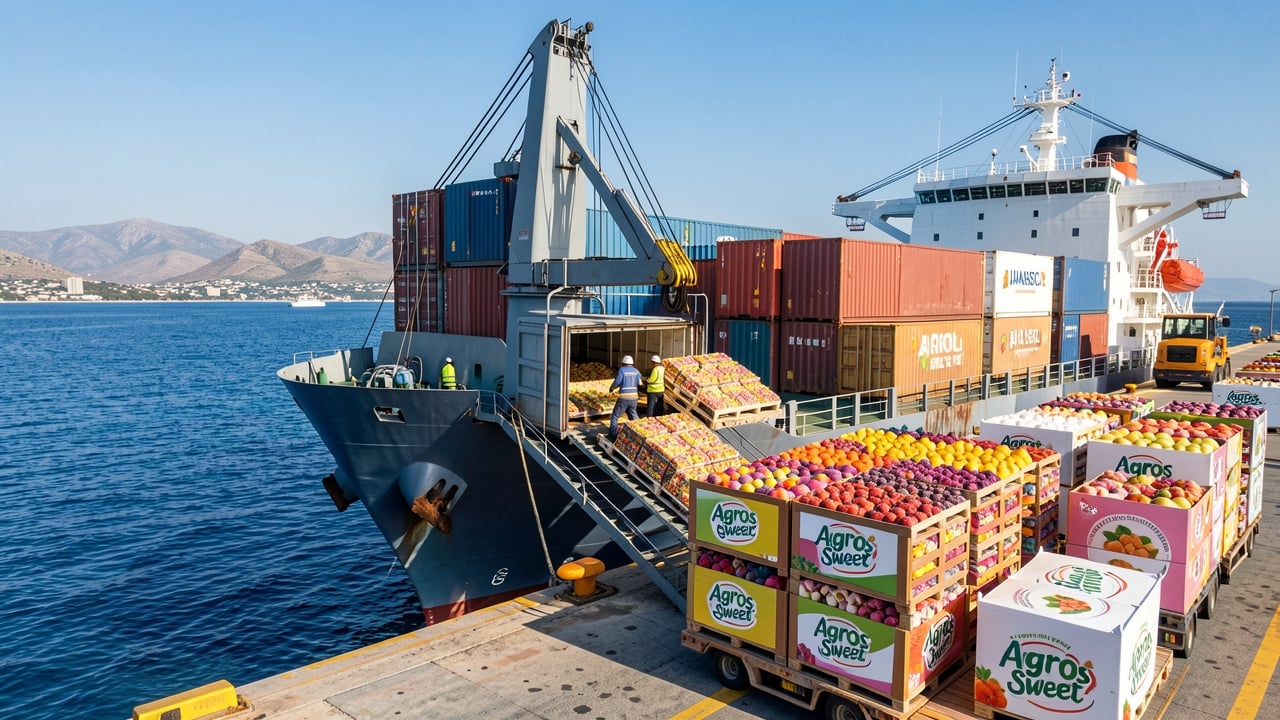
In the heart of the Cypriot village of Agros, a modest family workshop has transformed into a benchmark for agricultural‑food entrepreneurship, using the European Union’s Common Agricultural Policy (CAP) and maritime logistics to reach markets across Europe, the United States, Australia, Japan and beyond.
Background and CAP Support
Cyprus’ participation in CAP places a strategic emphasis on revitalising rural populations, enhancing competitiveness and safeguarding natural resources. The programme funds projects that promote healthy eating, sustainable farming and, crucially for exporters, the development of certified, geographically‑protected products.
Founding Story
In 1986, Niki Agathokleous and her husband returned from a brief stint in Nicosia to their native Agros with a vision: to turn surplus local fruit and vegetables into high‑quality spoon‑sweets. Operating from a two‑square‑metre space, they launched a tiny production line while expecting their third child. By 1989 the venture formalised as a limited company, shifting from home‑based craft to an organised business.
Growth and Export Strategy
The flagship product, Agros Rose Sweet, earned Protected Geographical Indication (PGI) status, a credential that has opened doors in premium markets that value origin authenticity. Today the company processes roughly 250 tons of seasonal fruit and vegetables annually and offers a portfolio of 90 distinct products.
- Employment: 25 local jobs, supporting the village economy.
- Supply Chain: Direct contracts with over 40 regional growers, ensuring traceability.
- Quality Systems: ISO 22000 and HACCP certifications that meet international import requirements.
Export logistics are central to the firm’s expansion. Finished goods are palletised in temperature‑controlled crates, trucked to Limassol Port, and loaded onto container vessels under a dedicated cold‑chain protocol. Partnerships with local shipping agents guarantee slots on liner services to Rotterdam, New York, Sydney and Osaka, where distributors value the product’s PGI label.
Implications for Cyprus Shipping and Trade Logistics
The success story underscores the symbiotic relationship between agricultural innovation and maritime transport. As Cyprus seeks to diversify its export base, food‑grade cargoes like Agros sweets demonstrate the feasibility of high‑value, low‑volume shipments that require specialised handling – a niche that Cypriot shipping agencies can cultivate.
Moreover, the company’s reliance on CAP‑financed modernisation—investment in processing equipment, quality certification and export documentation—highlights the importance of aligning policy support with logistics capabilities. Shipping lines offering refrigerated container services stand to benefit from increased demand, while port operators can optimise facilities for rapid turnover of perishable goods.
Future Outlook
Looking ahead, the Agros sweet producer plans to extend its product range into organic and vegan segments, targeting emerging markets in the Middle East and Southeast Asia. Continued collaboration with maritime partners will be essential to maintain supply‑chain resilience, especially in the face of fluctuating fuel prices and evolving maritime regulations.
In summary, the journey from a two‑metre kitchen to global shelves illustrates how CAP funding, strategic certification and efficient maritime logistics can turn a village‑scale operation into a competitive player on the world stage.